Hella
Hella
A strategic stop on the Ring Road, Hella opens access to Hekla, the Landmannalaugar Highlands, and the glaciers of south Iceland.
The small village of Hella sits on the banks of the Ytri-Ranga River, about a hundred kilometers east of Reykjavik via the Ring Road. Once a resting place for Irish monks, it's also an excellent starting point for trekking between plains, fire, and ice. Just 35 km to the north, the mighty Hekla volcano will send shivers down your spine!
History
At the dawn of Iceland's settlement, Irish monks—not Norse settlers, as one might have expected—passing through the Hella region occasionally sheltered in caves along a river, using them as makeshift dwellings. Among the earliest to discover the locality, they took advantage of fresh water sources and the abundance of salmon in the surrounding waters.
However, official credit for founding Hella goes to ÞOrsteinn Björnsson, in the second half of the 1920s. In 1927, he opened a shop near the bridge spanning the Ytri-Ranga River, which gradually sparked the village's development. A monument dedicated to him still stands within the village.
About a decade later, the local cooperative society "Þór" took ownership of the shop and revived commercial activity. Hella flourished alongside the thriving cooperative, eventually becoming the commercial hub of the western Rangárvallasýsla region. The town continued its growth in the 1960s with the arrival of workers building power plants in the area. Politician Ingólfur Jónsson, once nicknamed the owner of Hella because of his influence in the village and neighboring towns, leveraged this prominence to advance his career and become a minister in the Icelandic government.
Today
Although the local cooperative's influence has waned, Hella remains a thriving town. Now a community of over 800 inhabitants, it increasingly relies on tourism and agricultural services to thrive. Livestock farming is also practiced, as evidenced by various facilities: poultry and livestock slaughterhouses, meat processing plant, hatchery, veterinary center, fisheries, and more. The arrival of new hotels has further boosted the town's capacity to welcome the growing number of travelers seeking tranquility. On the south side of the Ring Road, hidden among trees and shrubs near the river, a camping area welcomes nature lovers.
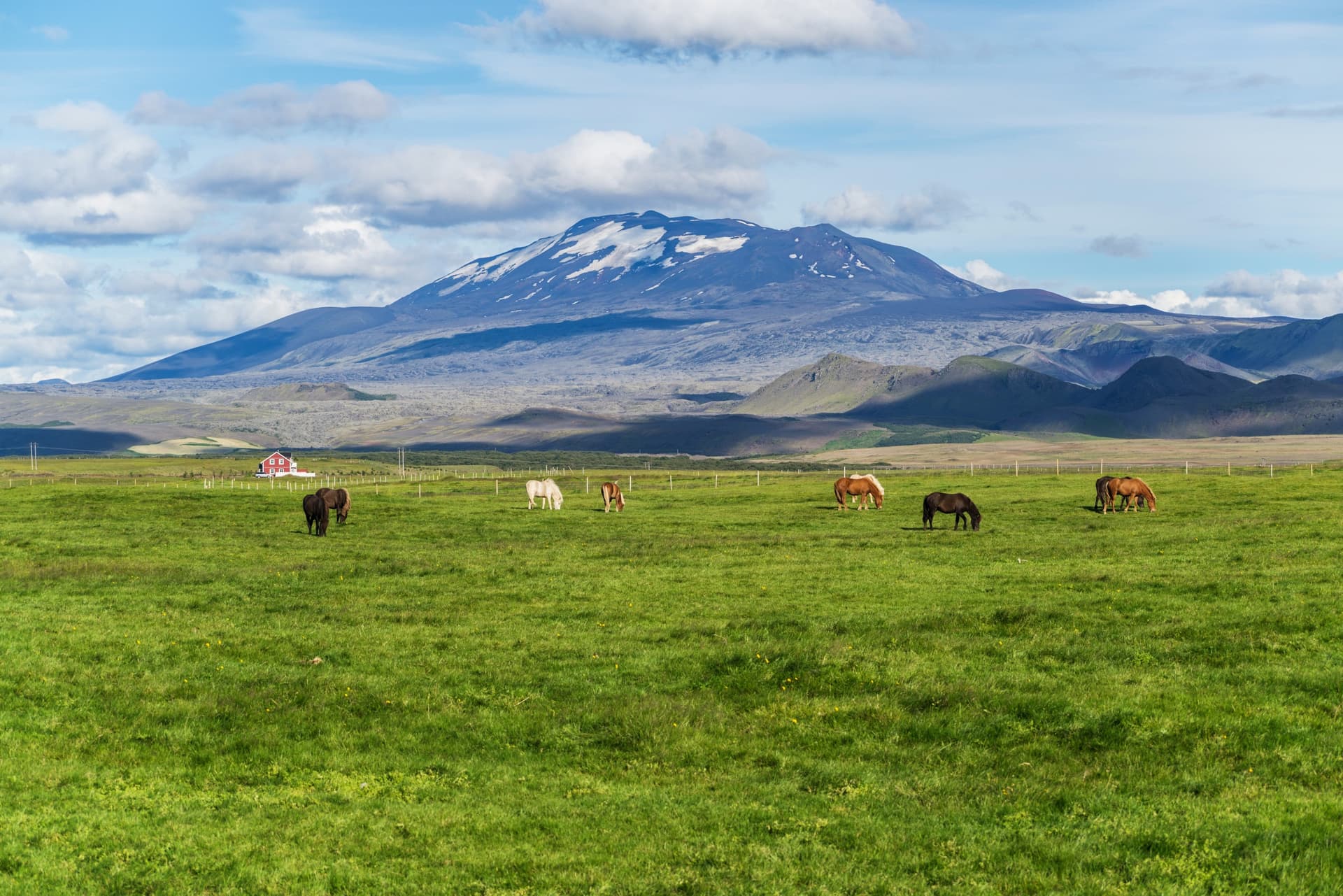
In Hella village, visitors delight in strolling along the banks of the Ytri-Ranga, finding a quiet spot and casting a fishing line to try their luck catching salmon. Children can enjoy the heated swimming pool's facilities and water slides, or embark on a dog sledding adventure in the surrounding area. If you want to try horseback riding, farms near Hella organize introductory sessions and horse treks across the plains, reaching the region's main attractions.
Indeed, Hella sits on Iceland's ring route, at the crossroads of the best circuits in the country's south.
The Blue Ice Tour: Trekking Through a Frozen World
About thirty minutes from Hella, join the "Blue Ice Tour," a trek into the heart of the famous Solheimajokull glacier. With a guide, you'll navigate a frozen realm, crossing crevasses, ridges, and meltwater ponds to reach the renowned blue ice cave. A truly unique experience!
After the Ice, the Fire: Hekla
Hekla, or "The Gateway to Hell," lies 35 km north of Hella. Rising to nearly 1,500 meters beneath a crown of eternal snow, this formidable volcano has never ceased to make headlines. Having erupted more than twenty times since 1104, it remains unpredictable. A challenge for thrill-seekers! Climbing Hekla takes approximately 8 hours. You'll encounter raw lava fields alongside snow-covered trails. At the summit, as you might imagine, the views will leave you speechless!
Before your trek, be sure to visit the Hekla Center, which offers a contemporary multimedia exhibition on the volcano's geology and history.
The Secret Lagoon
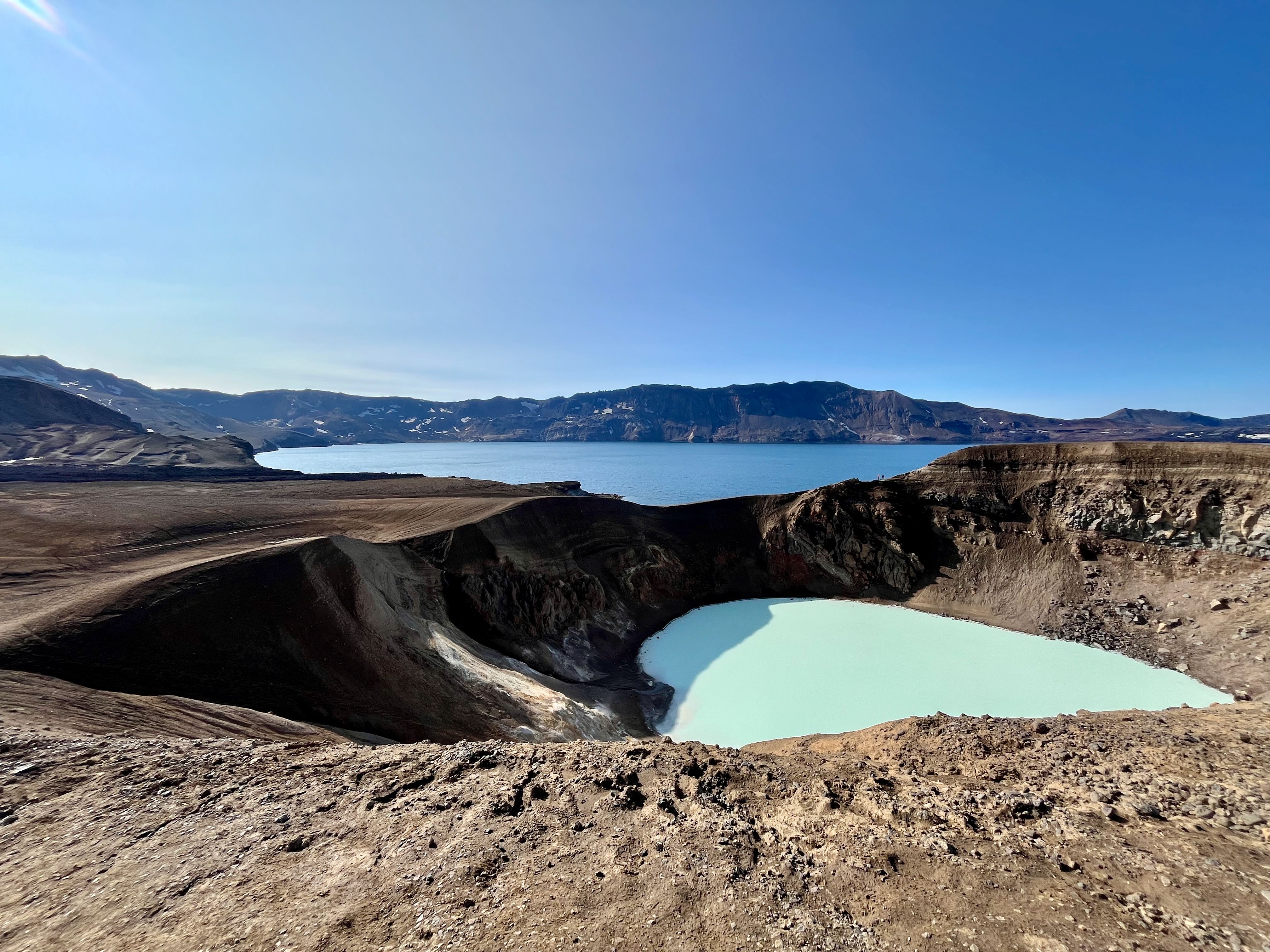
Southwest Iceland harbors several geothermal springs, including the Secret Lagoon near the village of Flúðir, roughly 50 km from Hella. It's the country's oldest artificial hot spring pool. The site remains popular for its mossy lava fields, azure waters, and a small geyser, all set within an idyllic, verdant landscape.
Climate
Hella enjoys a subarctic climate of the Dfc type, meaning no dry season, according to the Köppen-Geiger classification. The average annual temperature hovers around 5°C. Rainfall averages 318 mm of precipitation per year.
While May to June represents the best time to visit the village, Hella is equally rewarding in winter. Snow-sculpted landscapes, the frozen waters of the Ytri-Ranga, not to mention the Northern Lights will captivate you. Moreover, since Hella is quite small, there aren't many streetlights to interfere with the spectacle after dark. One thing: bundle up well!
There are several ways to reach Hella from Reykjavik. You can take the bus serving the Ring Road—the vehicle passes once daily—or rent a car.
If driving, the journey to Hella from the Icelandic capital takes about an hour and a half. You leave town via Norðlingaholt toward the Hellisheiði moor, via Route 1. You cross the hills to Hveragerði, then skirt Mount Ingólfsfjall to reach the town of Selfoss. From there, expect about 30 minutes of driving through the countryside to arrive in Hella.
Since Hella is a small town, you can easily explore it on foot. To venture beyond, you can choose between horses, dog sleds, buses, or rental vehicles.
Activities to Experience
- Relax in geothermal waters
- Visit memory-laden caves
- Explore dormant volcanoes in south Iceland
- Taste pylsur, the Icelandic hot dog, from a street-food vendor
- Camp by the banks of the Ytri-Ranga River, and more
Want to discover this destination?
Our local advisors design your tailor-made trip.