Which vehicle should you rent for a self-drive tour in Iceland?
What better way to discover the splendor of Iceland's landscapes in complete freedom than a self-drive adventure?
What better way to discover the splendor of Iceland's landscapes in complete freedom than a self-drive adventure? But before embarking on your journey, it's wise to understand the country's driving conditions to choose the vehicle best suited to your trip. Here's our expert advice for selecting the right type of vehicle to explore Iceland's roads…
Renting a car or 4x4 based on your itinerary
Planning a self-drive tour in Iceland requires preparation. Before choosing the type of vehicle to rent, it's essential to know the different stages that will make up your itinerary. The reason is simple: several options are available depending on the sites you wish to discover in Iceland.
The first option is to drive Route 1. Also called the Ring Road, it's an asphalt road that allows you to circle the entire country of Iceland. Spanning nearly 1,330 km, Route 1 is ideally completed in a week and gives access to the country's main attractions. Moreover, if you don't have much time, Route 1 is a perfect introduction to Iceland.
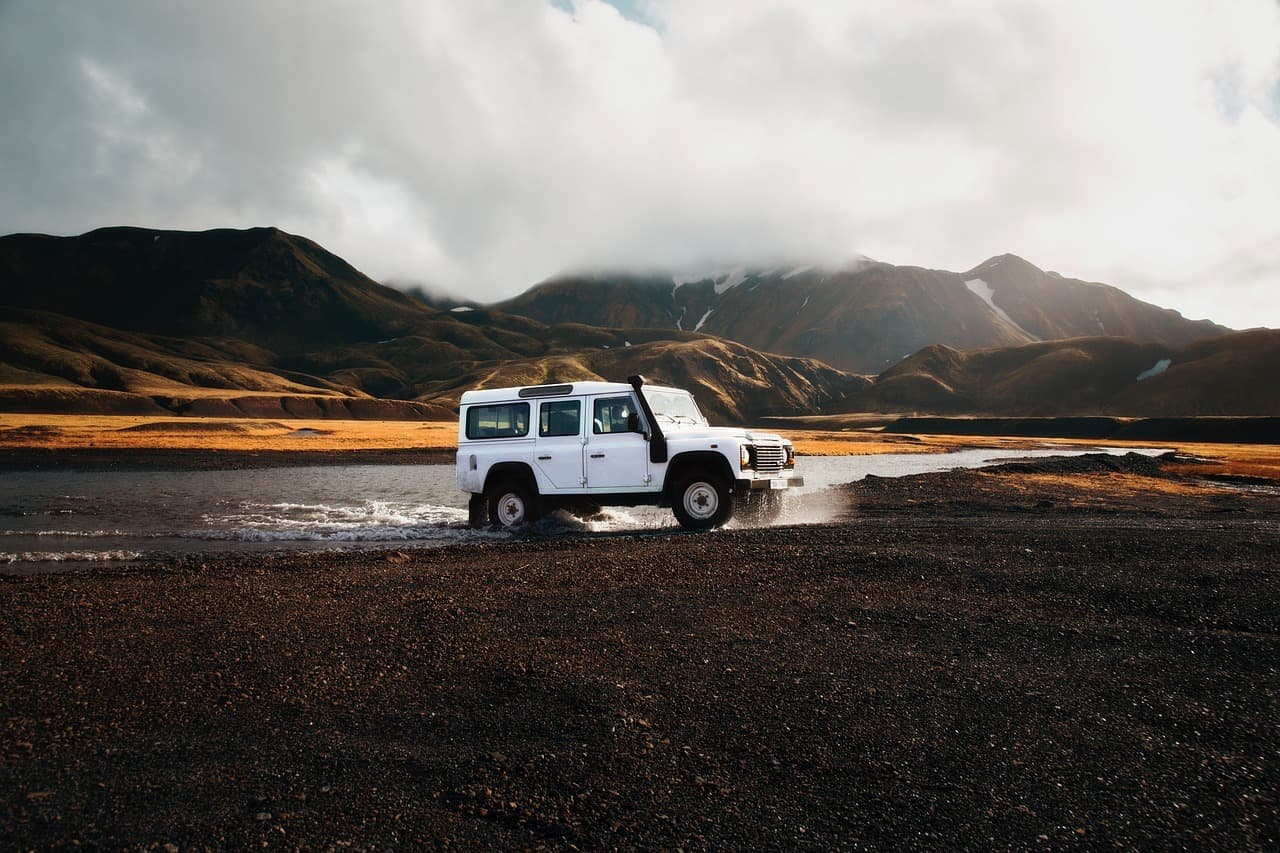
The second option is to venture beyond Route 1 by taking the F-Roads. These are secondary roads that lead to Iceland's most remote corners, primarily in the highlands. Because they're difficult to access in a standard vehicle, mountain roads are reserved for 4x4 vehicles and Super jeeps. Furthermore, you'll need solid driving experience as you may, for example, have to ford rivers. But the adventure is well worth it, as traveling the F-roads offers the chance to traverse extremely varied and unique landscapes and stop wherever you wish.
Finally, for practical and economic reasons (particularly to avoid hotel accommodation), it's also possible to rent a vehicle that combines both transport and accommodation, such as a 4x4 with a roof tent, a van, or even a camper van. Note that regardless of the type of vehicle rented, off-road driving and wild camping are strictly prohibited in Iceland for obvious environmental protection reasons.
Renting a car or 4x4 based on season
Another condition to consider before renting a vehicle for a self-drive tour in Iceland: the season! In winter and spring, the F-Roads are closed to traffic to prevent accidents related to snow, thawing, sleet, and flooding. These mountain roads reopen one by one during June and naturally close again toward the end of September. As for Route 1, although it's paved and in good condition, it's recommended to opt for a 4x4 to avoid complications and vehicle abandonment in case of snow. To check road conditions, visit http://www.road.is/.
In summer (April to September), all roads are open. As mentioned earlier, if you don't plan to visit the Highlands accessed via the F-Roads, a standard car is sufficient for rental. Conversely, if you want to venture off the beaten path, an all-terrain vehicle is preferable. In any case, it's the ideal season to sleep under canvas if you wish to rent a vehicle with a roof tent.
Learn more about how to get around in Iceland
Frequently asked questions
No, a 4x4 is not mandatory if your itinerary is limited to Route 1 (Ring Road), which is entirely asphalt and accessible in a standard car. However, if you wish to take the F-Roads to explore the highlands, a 4x4 or Super jeep is essential. In winter, a 4x4 is strongly recommended even on Route 1 due to snowy conditions.
The F-Roads (mountain roads leading to the highlands) are generally closed from autumn through late spring. They reopen progressively in June and naturally close again toward the end of September. The exact opening dates vary each year depending on weather conditions. Check road.is to learn about Iceland's road conditions in real time.
No, wild camping is strictly prohibited in Iceland, regardless of the type of vehicle used. This regulation aims to protect the country's fragile ecosystems. You must stay at official approved campgrounds. The good news: Iceland has a well-developed network of campsites, ideal for van and camper van travelers.
Route 1, also called the Ring Road, spans approximately 1,330 km and circles Iceland completely. It's ideally completed in a week, which allows you to stop at the country's main tourist sites. If you have more time, plan for 10 to 14 days to explore the surroundings of each stop and fully enjoy the landscapes.
In Iceland, certain specific insurance policies are strongly recommended due to particular climatic conditions. Beyond standard collision insurance (CDW), consider purchasing gravel protection (GP), volcanic sand protection (SAAP), and high wind protection (WP). These coverages protect against frequent damage on Iceland's roads and can save you significant costs.