Camping in Iceland: a guide to camping by the rules
Camping in Iceland means choosing to travel with greater flexibility, waking up to breathtaking landscapes, and experiencing an extraordinary sense of freedom.
Camping in Iceland means choosing to travel with greater flexibility, waking up to breathtaking landscapes, and experiencing an extraordinary sense of freedom. It's also a way to enjoy attractive prices compared to other types of accommodation. Camping options, rates, best time to visit, rules, what to prepare... Discover everything you need to know before camping on a trip to Iceland.
Different ways to camp in Iceland
Sleeping under canvas at a campsite

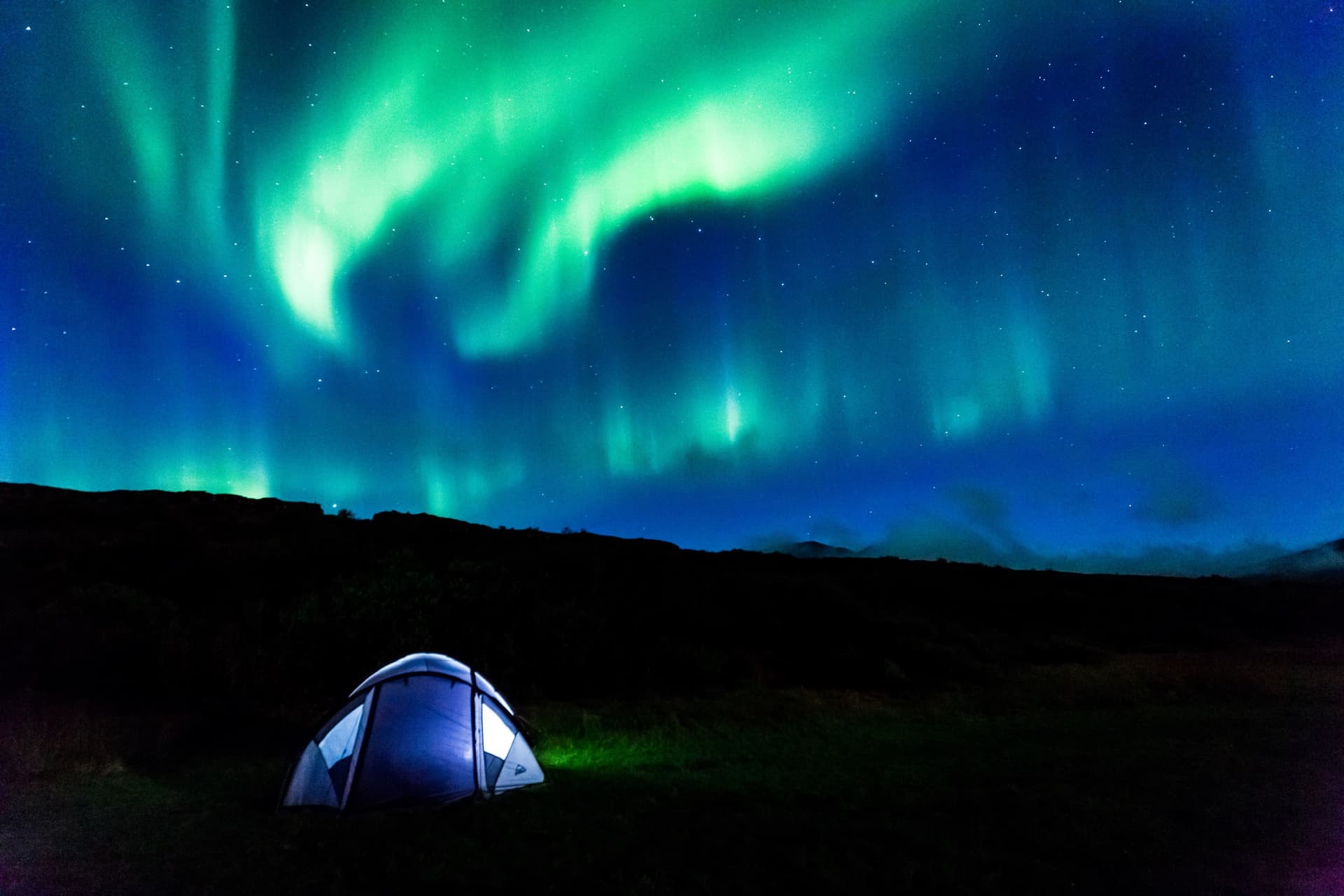
This is THE most economical solution for camping during a trip to Iceland. Beyond being the cheapest option, traditional tent camping offers the advantage of being closest to nature and having minimal space for sleeping.
It's also an excellent way to be free since all you need to do is prepare the necessary equipment and rent a car to travel through Iceland from campsite to campsite. The downside? It's ideal in summer but far less so in winter when you'll be exposed to harsh weather and cold temperatures, especially at night.
Vehicles equipped with rooftop tents

Not keen on lugging all your camping gear around? In that case, you can rent a vehicle equipped with a rooftop tent. The concept? A tent installed on the vehicle's roof that folds and unfolds super easily. Most rental vehicles with rooftop tents also come with all the necessary camping equipment (chair, table, charger, cooler...).
This solution is perfect for taking a self-drive tour of Iceland but also for venturing off the beaten path and beyond the ring road, especially if you opt for a 4x4. That said, this is still an option best suited to the summer season but less recommended in winter.
Camper vans

For travelers seeking both adventure and comfort, you can also consider renting a camper van. Unlike the previous options, camper vans allow you to enjoy the benefits of camping while benefiting from indoor comfort, namely: heating, a stove, sometimes toilets...
This is the ideal solution for camping in Iceland year-round, without suffering from harsh weather and winter cold. And while it's more expensive than traditional camping, it remains an interesting option compared to hotel and car rental prices.
Campsites in Iceland: what to expect

Amenities and facilities
Iceland has no fewer than 200 official campsites throughout the country. Most of them are located around the ring road, also called the Golden Circle so you'll have no trouble planning an itinerary to see all of Iceland's must-see attractions.
As for amenities and facilities, you'll find a bit of everything: from simple empty grounds where you can pitch your tent or park your van wherever there's space to more organized campsites where you get a dedicated pitch.
Equipment also varies from one campsite to another: most sites have sanitary facilities, electrical hookups, and water connections. Others offer more luxurious amenities such as a kitchen area, swimming pool or even a hot tub...
Rates
As mentioned, camping is the most economical accommodation option for sleeping in Iceland. Expect between 1000 and 3000 ISK per night per person on average (approximately 8 to 20 euros). Note that depending on the campsite, certain services (such as hot water, for example) may be charged as extras.
Can you wild camp in Iceland?
Can you go wild camping in Iceland? This is THE question many travelers ask themselves. And to disappoint you, the answer is no, or rather not really. In fact, wild camping has been regulated since 2015 and subject to penalties since 2017. According to the law, camping in tents, caravans or vans in all non-camping areas is prohibited.
Only certain conditions (not always clear) allow wild camping throughout Iceland. Indeed, the law stipulates that tent camping or camper van/motorhome camping is limited to official campsites or private land with the landowner's permission.
The only exception is tent camping on uncultivated land for one night only, and only if there is no campsite nearby and you are cycling and/or hiking. When in doubt, we strongly advise against attempting this for risk of incurring a heavy fine.
Questions to ask yourself before camping in Iceland

Anticipate weather-related risks
To go camping in Iceland, you must absolutely pay attention to weather conditions throughout your stay. This is because the weather is quite unpredictable on the land of Ice and Fire. From one moment to the next, you could face a storm, regardless of the season.
Furthermore, severe weather can lead to road closures. For all these reasons, we recommend following the weather forecast every day, several times a day:
You can find the official Icelandic weather forecasts at en.vedur.is ;
You'll also find all information related to weather conditions and road conditions on the official website of the Icelandic search and rescue team: safetravel.is.
Check the opening and closing dates of campsites
Another element to consider when camping in Iceland: the opening and closing dates of campsites. Indeed, most campsites close during winter. The best time to camp in Iceland is between mid-May and mid-September.
In any case, we recommend you check opening dates before booking and always have a backup plan in case a weather event disrupts your journey.
Prepare adequate equipment and materials as needed
Regardless of the season, camping in Iceland requires adequate equipment. Beyond all the basic gear, we strongly recommend getting a 3-season tent that is both sturdy and resistant to strong wind gusts. Also remember to bring extra tent pegs to secure the tent properly, as well as a sleeping bag with a comfort temperature of -10°C (14°F) and a ground mat that can insulate from the cold (R-value of at least 5).
Once there, we also recommend preparing all necessary equipment and food. Since the island is made up of vast stretches of largely uninhabited land, you will often struggle to find nearby shops for supplies. So make sure to bring enough water, food, and a spare fuel canister so you don't find yourself stranded in the middle of nowhere.
The Camping Card, the card to buy for unlimited access to over 30 campsitesIf you're planning your entire Iceland trip camping, we can only encourage you to buy the 'Iceland Camping Card'. The Icelandic camping card gives you unlimited access to about thirty campsites. It's valid for a maximum of 28 nights for a family (2 adults and 4 children under 16) and costs 179 euros. Good to know: the Camping Card also gives you discounts (fuel, food, drinks...) at Olís and ÓB gas stations. More information at campingcard.is |
Frequently asked questions
Wild camping is heavily regulated in Iceland since 2015 and has been subject to penalties since 2017. Camping outside official campsites or private land with the owner's permission is prohibited. The only exception concerns tent camping for one night on uncultivated land, only if you are traveling by bike or on foot and no campsite is available nearby. When in doubt, always opt for an official site to avoid a fine.
The best time to camp in Iceland is between mid-May and mid-September. During this period, most campsites are open, temperatures are milder and days are very long (or even without night in June). Outside this period, many campsites close and weather conditions (cold, storms, snow) make tent camping or rooftop tent camping very difficult. A heated camper van remains the viable option year-round.
The average price of a pitch at an official campsite in Iceland is between 1000 and 3000 ISK per night and per person, or approximately 8 to 20 euros. Certain services such as hot water may be charged as extras. To reduce costs, consider the Iceland Camping Card at 179 euros, valid for 28 nights for a family of 2 adults and 4 children under 16 at over 30 partner campsites.
The Iceland Camping Card is a camping card that gives you unlimited access to over 30 official campsites in Iceland. It's valid for a maximum of 28 nights for a family of 2 adults and 4 children under 16. The price is 179 euros. In addition to campsite access, it offers discounts on fuel, food and drinks at Olís and ÓB gas stations. More information at campingcard.is.
Camping in Iceland requires sturdy equipment adapted to unpredictable weather conditions. Make sure to bring a 3-season tent resistant to strong wind gusts, extra tent pegs, a sleeping bag with a comfort temperature of at least -10°C and an insulating mat with an R-value of at least 5. Also bring waterproof clothing in layers, enough food and water, and a spare fuel canister as shops are rare in many parts of the island.