Iceland's Geysir: Where and how to witness this incredible geothermal phenomenon?
Located in the Haukadalur valley in southwestern Iceland, the Geysir geothermal area ranks among the country's most popular attractions.
Located in the Haukadalur valley in southwestern Iceland, the Geysir geothermal area ranks among the country's most popular attractions. Born from the activity of an ancient volcano, the area encompasses numerous geysers, fumaroles and hot water pools. It is home to the world's most renowned geyser: the famous Geysir. In fact, this phenomenon lent its name to this type of natural feature. What can you see at Geysir? How do you get there? When should you visit? Discover our practical guide to visiting the Geysir site.
What is the Geysir site in Iceland?
The Geysir geothermal field
The Geysir geothermal field (also known as Geysir Geothermal Area in English) is a natural geothermal site formed by an eroded ancient stratovolcano. It features a rhyolitic lava dome, a basaltic volcanic cone and numerous hot springs. The site is particularly renowned for its geysers, including Litli Strokkur, Litli Geysir, Fata, Blesi, Konugshver, Geysir and Strokkur.
Part of the famous Golden Circle travel route, Iceland's emblematic tourist circuit, the Geysir geothermal field is one of the country's most visited sites.
The Geysir and Strokkur geysers

The Geysir geothermal field attracts countless visitors because of its geysers. As a reminder, geysers are hot water springs that erupt at high pressure intermittently. These natural phenomena occur when water seeps into the ground and encounters rock itself heated by volcanic magma. The pressure is such that a jet of boiling water expels itself from the ground. It's worth noting that geyser water temperatures can reach 100 degrees Celsius!
To date, the most renowned geyser on the site is the one that gave its name to the place: Geysir. For some background, the first documented mention of a Geysir hot spring eruption dates back to 1647. While its activity declined in the early 1900s, the geyser reawakened and became highly active following a series of earthquakes in 2000. During the two days following the quake, the great Geysir erupted to more than 120 meters high, making it one of the world's largest geysers. Since then, the geyser has been much less active and its eruptions far less frequent.
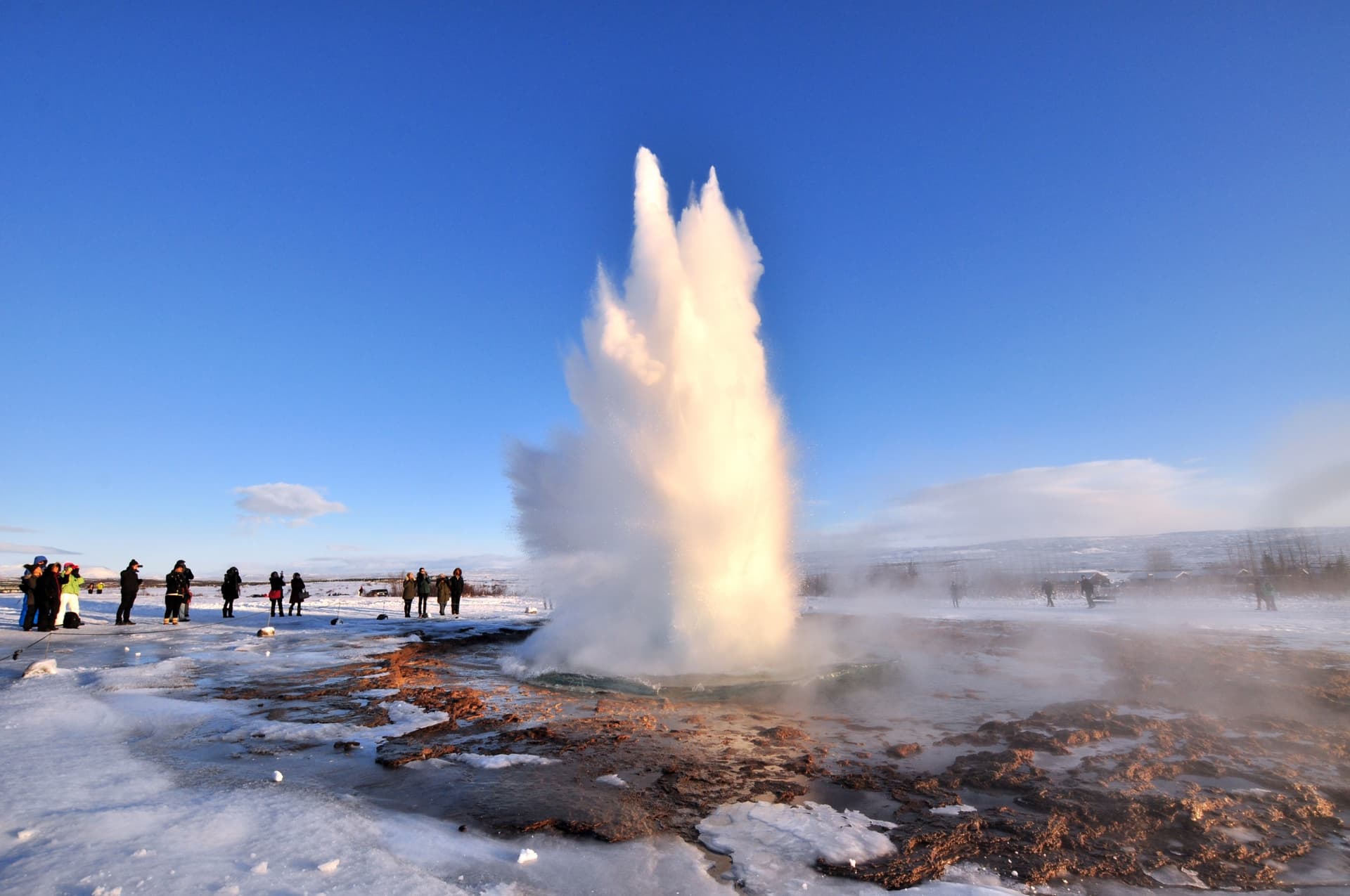
Today, the most active geyser in the Geysir geothermal field is Strokkur. Located approximately 400 m from Geysir, Strokkur has the distinctive feature of erupting every 5 to 10 minutes. Its water jets spurt to around twenty meters, sometimes reaching 40 meters.
Did you know?
Geysir is one of the first geysers documented by scientists. In fact, it gave its name to this type of natural phenomenon. The word "geyser" comes from the Icelandic word "gjósa,
