Goðafoss (Waterfall of the Gods)
Goðafoss (Waterfall of the Gods)
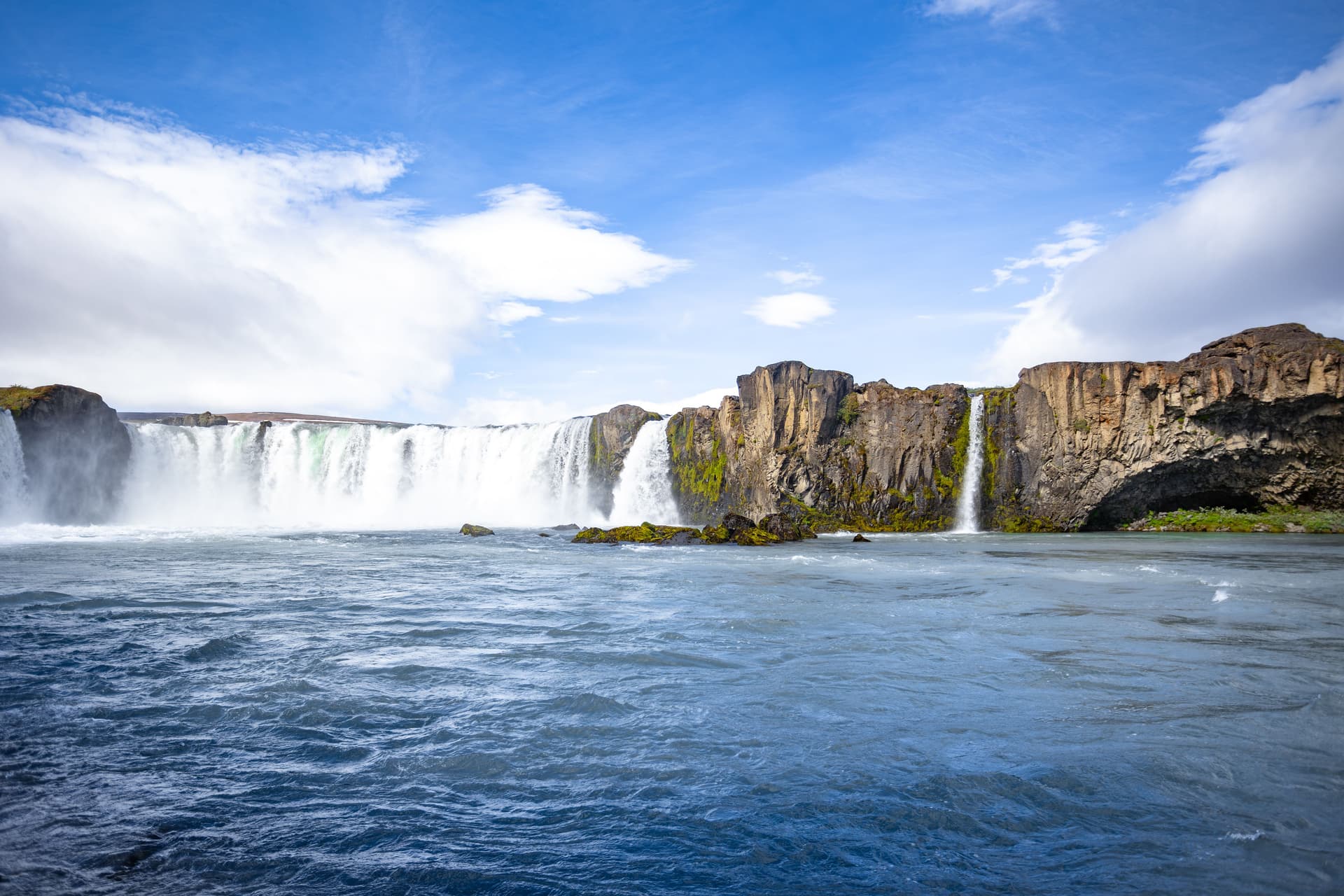
Goðafoss, the 'Waterfall of the Gods,' cascades in a horseshoe formation across the Skjálfandafljót river in northern Iceland. Steeped in history and raw beauty, it's just minutes from Route 1.
Goðafoss — 'Waterfall of the Gods' in Icelandic — spreads in a horseshoe formation across the Skjálfandafljót river in northern Iceland. Roughly thirty metres wide and twelve metres high, it owes its name to a defining moment in the year 1000: the local chieftain Þorgeir Ljósvetningagoði is said to have thrown his Norse idols into it following the official adoption of Christianity. Accessible from Route 1, it ranks among the country's most visited waterfalls.
Practical information at a glance
- Access: roadside on Route 1 (Ring Road), approximately 50 km east of Akureyri; free parking on both sides of the river.
- Entrance: free, site open to the public.
- Recommended duration: 30 to 60 minutes to explore both banks.
- Attire: waterproof footwear recommended — trails near the banks are often wet and slippery.
- Accessibility: the car park is accessible; paths to viewpoints are partially passable but not equipped for wheelchairs.
What you'll see
The cascade divides into two main channels separated by a rocky islet. The Skjálfandafljót's waters, tinged blue-green depending on the light, plunge over hexagonal basalt columns characteristic of Icelandic volcanism. In winter, the edges freeze partially, creating spectacular ice formations around the water curtain.
History and context
In the year 1000, the Althing (Icelandic parliament) adopts Christianity as the official religion. Þorgeir Ljósvetningagoði, tasked with settling the debate, is said to have cast his statues of Norse gods into this waterfall — hence the name 'Goðafoss.' The episode is recounted in the Njáls saga and remains one of Iceland's founding narratives.
Highlights of your visit
The eastern bank: frontal view
The trail on the eastern side offers the most direct perspective of the main cascade. You follow the river for several hundred metres before reaching a rocky promontory facing the water curtain. This is the classic angle, ideal in raking light.
The western bank: sweeping view
Less crowded, the western bank allows you to overlook the cascade from above and observe the basalt columns below. The path is shorter but more steep.
The central islet
In dry conditions and when water levels are low, some visitors venture across to the central rocky islet. Exercise caution: the rocks are slippery and the crossing is unmarked.
Photography tips
Golden light in late afternoon during summer illuminates the cascade head-on from the eastern bank. In winter, the northern lights may appear above the site — a tripod is essential. An ND filter allows you to smooth the water's movement in long exposure. Avoid peak hours (midday in summer) for crowd-free images.
Location and access
Goðafoss lies on Route 1, roughly 50 km east of Akureyri. Most travellers stop here while circumnavigating the island on the Ring Road. No regular public transport serves the site; a rental vehicle is necessary. The car park accommodates campervans.
Nearby attractions
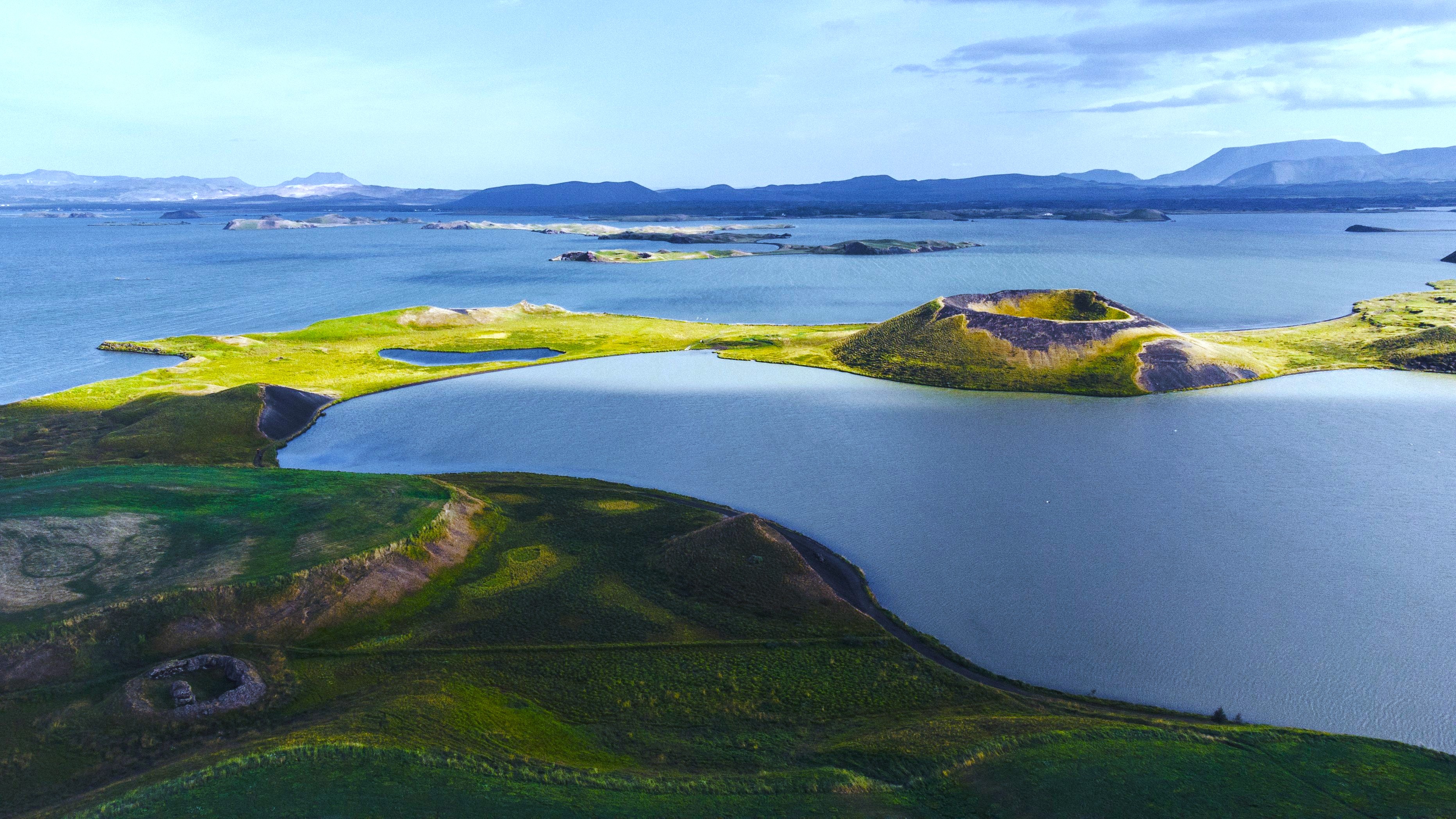
- Lake Mývatn — approximately 50 km east, this volcanic lake concentrates hot springs, pseudocraters, and migratory birds.
- Akureyri — Iceland's northern capital, roughly 50 km west, with museums, botanical gardens, and local culture.
- Húsavík — a port renowned for whale watching, accessible from the region.
- Dettifoss — Europe's most powerful waterfall, approximately 80 km east, within Vatnajökull National Park.
Frequently asked questions
The site is accessible year-round. In summer (June–August), daylight is long and trails are clear. In winter, ice formations and the northern lights add special interest, though roads may be snow-covered — check conditions on road.is before departing.
No, access to Goðafoss is entirely free. Parking on both banks is also free of charge.
Yes, this is the classic itinerary from Akureyri. Goðafoss takes 30 to 60 minutes to visit; allow then 45 minutes of driving to reach Mývatn and its numerous volcanic sites.
Yes, without restriction. The site is open air and freely accessible. Stay on marked trails for your safety and preservation of the banks.
The car park is accessible, but trails to viewpoints are unequipped and only partially passable. The eastern bank offers more level access than the western bank.
Allow 30 to 60 minutes to explore both banks and enjoy different viewpoints. Photographers wishing to wait for ideal light can stay longer.
Interested in this visit?
We can include it in your personalised itinerary.