The Eldgjá Rift
The Eldgjá Rift
In the heart of Iceland's Highlands, Eldgjá tears across the landscape for 40 km. Born from the Katla eruption in 934, this fiery rift leads to the Ófærufoss waterfall.
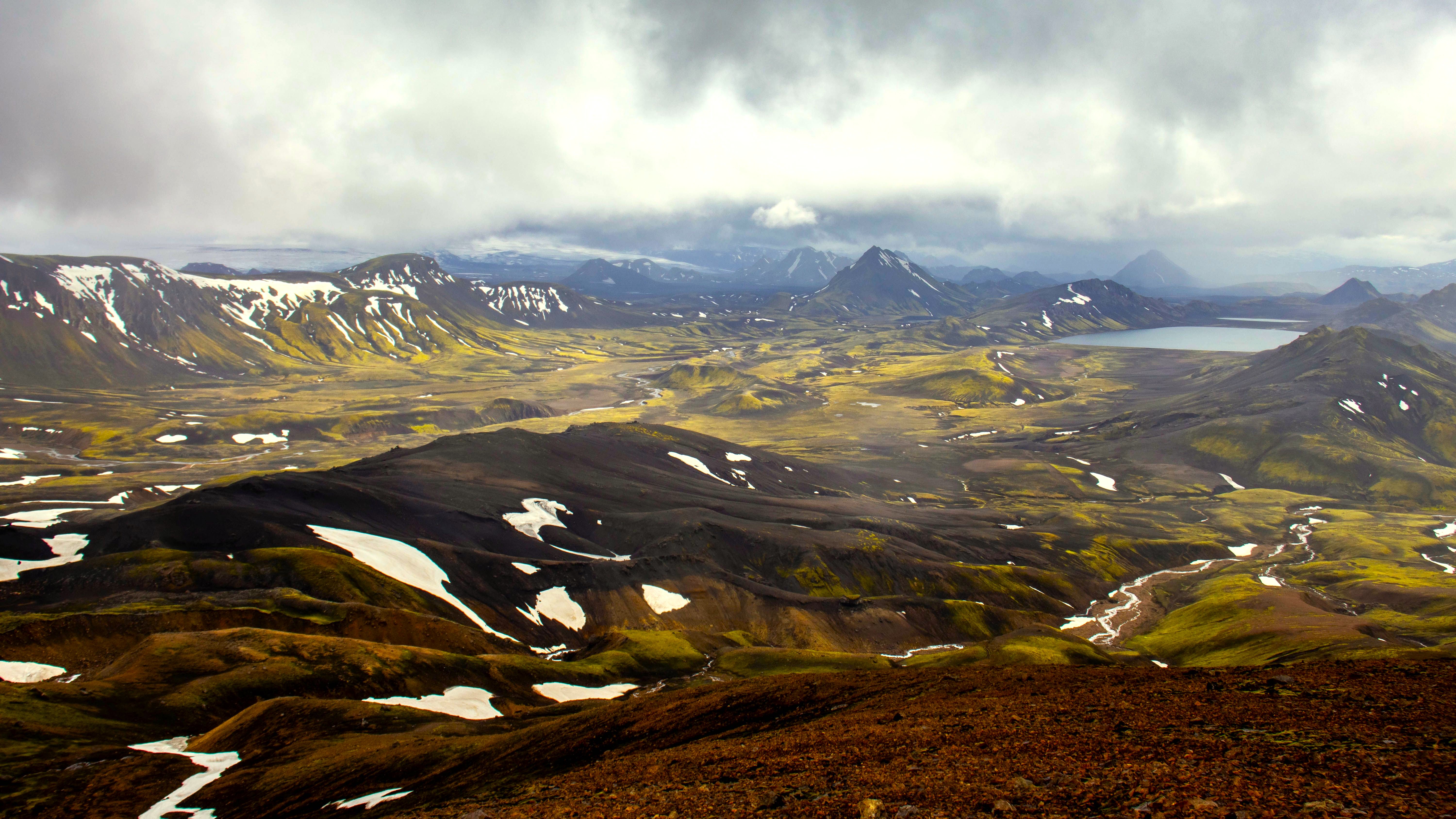
One of the most significant eruptive fissures on Earth lies in Iceland. Located east of the Landmannalaugar route, Eldgjá bears the nickname of the fire gorge, a reference to its incredible formation. You'll feel remarkably small within this canyon, whose landscape beauty is equally breathtaking. Don't forget your camera!
The fissure winds toward lush green expanses, through a series of gorges and craters unique in the world. While it's possible to visit by car, opt for walking to fully appreciate everything the site has to offer. Besides, the waterfalls are only accessible on foot—but the scene absolutely deserves the journey!
History
Valorvaldur Thoroddsen discovered the site in 1893. The Eldgjá fissure sits at the heart of the Katla chain, just kilometers from Lakagígar. The rift is believed to have resulted from an explosion of the Katla volcano around the year 934, lasting nearly six years. During this period, the eruption expelled over 18 km³ of lava, including 1.3 km³ of tephra. It was one of the most significant magmatic eruptions recorded in the Holocene.
The Eldgjá canyon stretches roughly forty kilometers long, between the towering ice caps of Vatnajökull and Myrdalsjökull. A gorge about 8 km long is visible at the center of the rift, formed together with the Nyrðri Ófæra river to create the splendid Ófærufoss waterfall. Before the 1990s, a natural arch allowed passage from one side of the rift to the other, above the cascade. Unfortunately, this providential bridge crumbled over time, leaving only a few stone blocks at the water's surface.
Eldgjá presents an average depth of 140 m, with a maximum of 270 m. It spans 600 m in width. It's an unprecedented place, within the earth's depths, where you can admire nature's wonders. Excavations conducted here have identified basalt and hyaloclastite dating back over 700,000 years. The gorges are magnificent, and traces of ancient lava flows remain visible in certain spots. However, around 1783, activity from Lakagígar partially buried the original flows.
Eldgjá Today
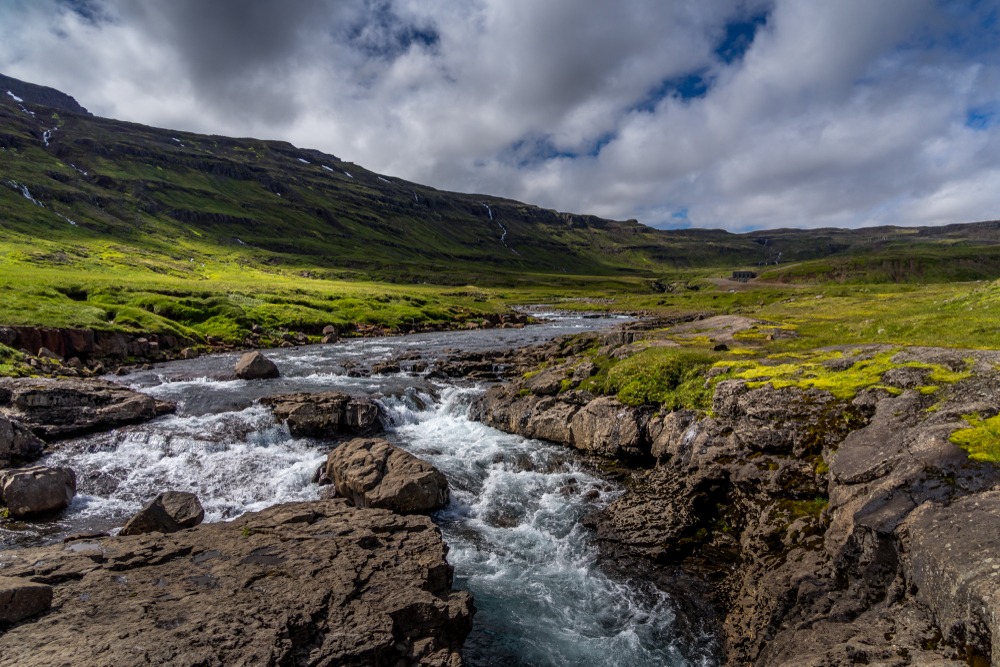
Eldgjá offers a grand landscape, sometimes lunar and sometimes verdant, which will surely appeal to hiking and photography enthusiasts. When you arrive at the site's entrance, you'll be advised to park your vehicle in the designated area and prepare to explore the rift on foot. Refuel your energy and bring warm clothing, as air currents crossing the fissure walls can sometimes be brisk.
The route follows the river. The impressive walls of Eldgjá will certainly make a lasting impression. On the rock faces, with careful attention, you'll notice a date: this indicates the day the rocks detached from the cliff to settle in the heart of the gorge. No need to worry—no accidents have occurred at Eldgjá in years. But if the path concerns you, it's possible to take the ridge via a more or less difficult and steep trail. From the heights, you can enjoy a sweeping view across the entire rift and, in the distance, the swirling waters of Ófærufoss.
The Impassable Ófærufoss Waterfall
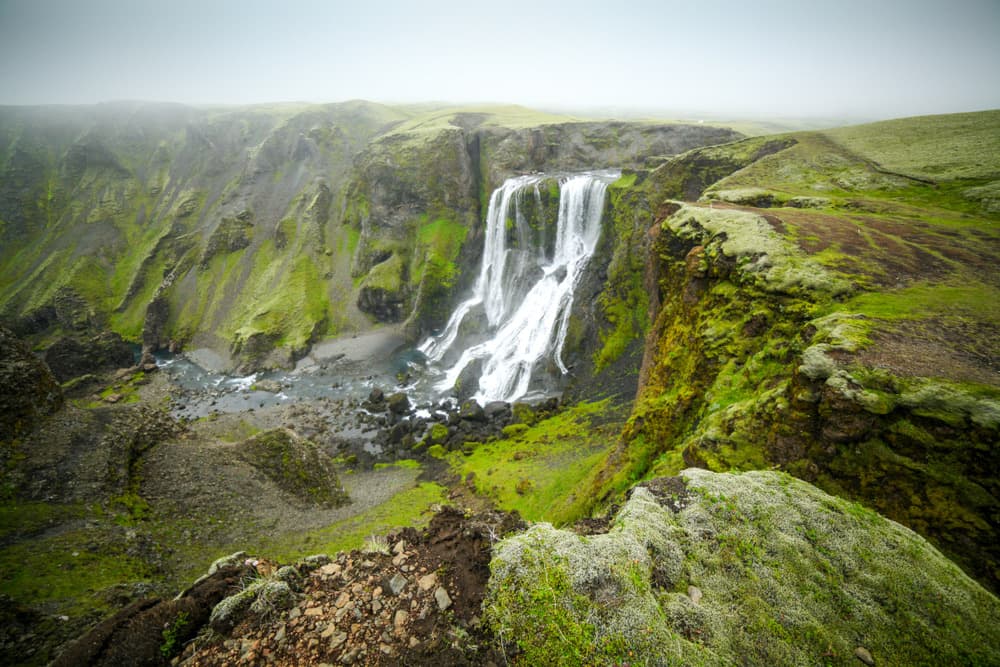
From the parking area at the canyon's mouth, a marked hiking trail will lead you to the Ófærufoss waterfalls after 30 to 40 minutes of walking. One of the country's most beautiful cascades, it's fed by the Nyrðri Ófæra river. An observation platform has been created at the site so visitors can fully enjoy the spectacle. Since 2011, Ófærufoss and its surroundings, as well as the northern part of the Eldgjá rift, have been part of the Vatnajökull National Park. You can then extend your adventure toward Gjatindur mountain, north of the Eldgjá canyon, for different perspectives.
Eldgjá ranks among Iceland's highly recommended mountain attractions. Like most sites in the Highlands, the area can only be visited during the Highland Roads opening period, which runs from July through September. You'll need a 4x4 vehicle to navigate the rough roads and unbridged rivers on the way to Eldgjá. The most practical solution to reach the trail is to turn onto the ring road about 20 km west of the village of Kirkjubæjarklaustur. You then take route nr. 208 heading north. After about fifteen kilometers, turn left and follow the mountain road F208 Fjallabaksleið Nyrðri. From there, it's roughly 26 km to Eldgjá.
Accessibility
Due to its location in Iceland's Highlands, the Eldgjá area is only accessible from July through September.
Want to discover this destination?
Our local advisors design your tailor-made trip.