Diamond Beach
Diamond Beach
On Iceland's southeastern coast, Diamond Beach displays translucent blocks of ice across volcanic black sand. An ever-shifting landscape, accessible year-round from Route 1.
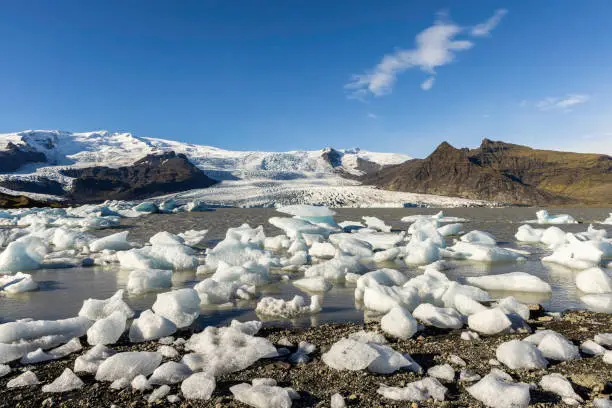
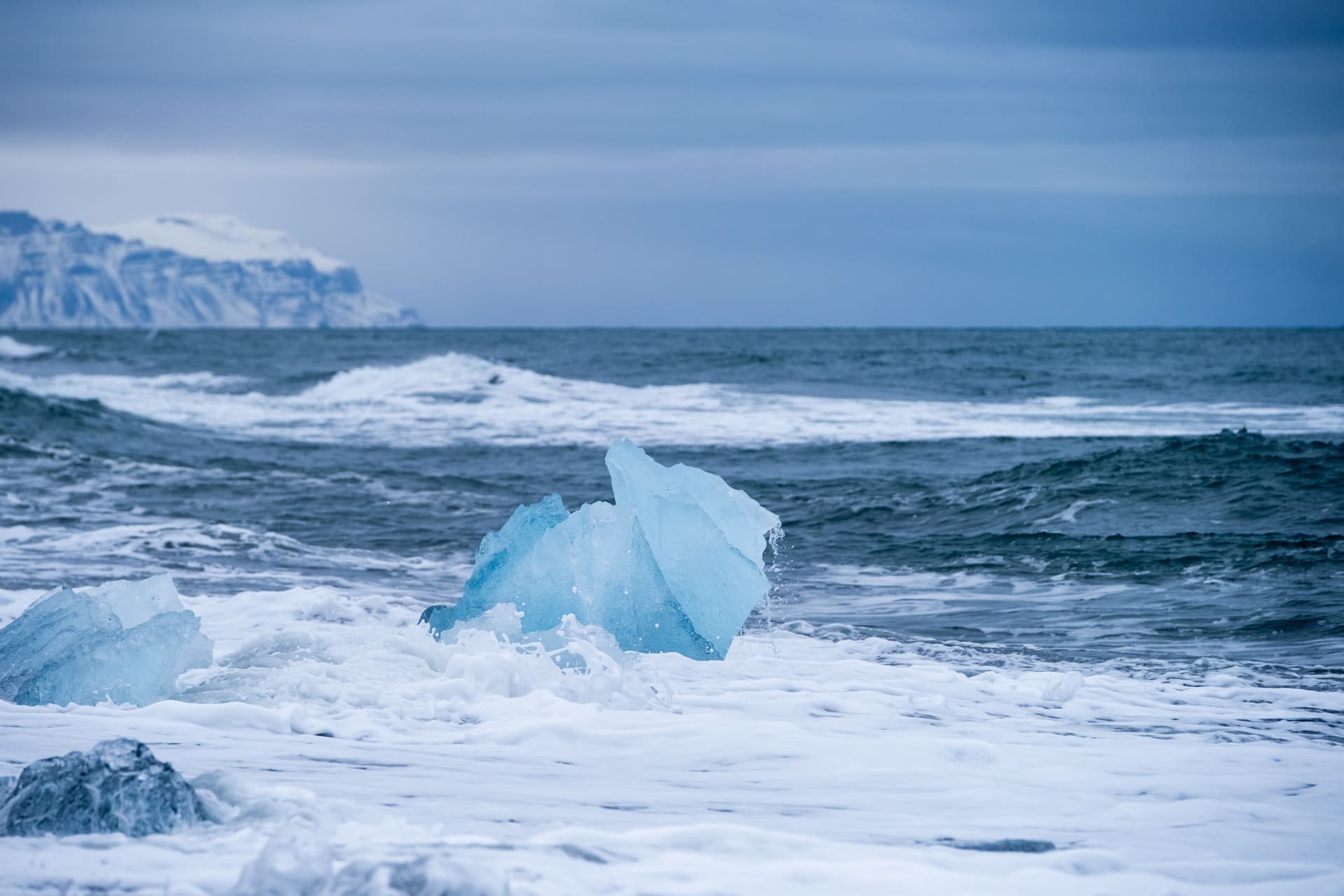
Diamond Beach is a black volcanic sand beach bordering the Jökulsárlón glacial lagoon in southeastern Iceland. Translucent blocks of ice, torn from the Breiðamerkurjökull glacier and cast ashore by the Atlantic Ocean, wash up here constantly. The contrast between blue and white ice, black sand and grey waves makes it one of the country's most photographed landscapes.
Practical information at a glance
- Access: Alongside Route 1 (Ring Road), at the mouth of Jökulsárlón lagoon — free parking on-site.
- Admission: Free, open access at all hours.
- Recommended duration: 30 to 60 minutes on the beach, best combined with a visit to the neighbouring lagoon.
- Attire: Strong wind is nearly constant — waterproof clothing and closed-toe shoes are essential.
- Safety: Waves can be unpredictable and dangerous; never turn your back to the water or sit on ice blocks near the shore.
- Accessibility: The car park is accessible, but loose black sand makes wheelchair navigation difficult.
What you'll see
Miniature icebergs and ice blocks of all sizes litter the black sand. Their transparency ranges from milky white to deep blue depending on density and age. Some blocks reach car size; others, polished by waves, resemble sculptures. Common seals sometimes rest on the ice or swim in the lagoon mouth.
History and context
Jökulsárlón lagoon formed in the 20th century as the Breiðamerkurjökull glacier retreated due to warming. Icebergs calve from the glacier front, drift slowly across the lagoon, then cross the mouth to wash ashore on the beach. This continuous cycle means the landscape changes daily: no two visits are alike.
Highlights of your visit
Golden light at the blue hour
In winter, the sun stays low on the horizon for hours. Raking light passes through the ice, revealing shades of blue and amber impossible to see in bright daylight. This is the window most sought by photographers.
Northern lights over the ice
Between September and March, on clear nights, the northern lights reflect in polished ice blocks. The beach, free of light pollution, offers an exceptional natural foreground to witness the phenomenon.
The seals
Common seals regularly frequent the lagoon mouth. They can be observed from a reasonable distance without approaching or disturbing them.
Photography tips
Black sand absorbs light and brings out the translucence of ice — expose for the highlights to avoid overexposing white blocks. The golden hour (sunrise and sunset) is ideal. In summer, the midnight sun offers warm, raking light all night long. Avoid midday in summer: the light is harsh and flat. Check your lens after each gust of sand-laden wind.
Location and access
Diamond Beach sits directly on Route 1, about 370 km east of Reykjavik and a few kilometres west of the town of Höfn. The car park is visible from the road. No regular public transport serves this spot; a rental vehicle is virtually essential. The Jökulsárlón lagoon lies immediately on the other side of Route 1, less than five minutes' walk away.
Nearby attractions
- Jökulsárlón Lagoon — The glacial lagoon itself, where amphibious boats and kayaks allow you to navigate between icebergs.
- Vatnajökull National Park — Europe's largest national park, encompassing Iceland's largest glacier.
- Fjallsárlón Lagoon — A smaller, less frequented glacial lagoon, about twenty kilometres to the west.
- Skaftafell — National park area with hikes to glacier tongues and waterfalls.
Frequently asked questions
The beach is accessible year-round. Winter (November to February) offers the most dramatic light and the chance to see the northern lights. Summer allows you to enjoy the midnight sun. Ice blocks are present in all seasons.
No. Climbing on icebergs is dangerous: they can tip without warning. Icelandic authorities formally advise against sitting on or climbing them.
Yes, both sites are separated by Route 1 and naturally visited together. Allow at least two hours for both, longer if you take a boat tour on the lagoon.
Yes. Sudden, powerful waves can surge without warning. Stay vigilant, never turn your back on the ocean, and keep your distance from the water if conditions are rough.
Route 1 is generally passable in winter, but weather can be severe. A 4x4 vehicle and winter tyres are recommended. Check Icelandic weather bulletins before you leave.
Yes. The absence of light pollution and ice blocks as a foreground make it a prime spot for aurora photography. A tripod and a bright lens (f/2.8 or wider) are essential.
Interested in this visit?
We can include it in your personalised itinerary.