Drangey
Drangey
Drangey rises from Skagafjörður fjord with its 180-meter cliffs, puffin colonies, and the story of the outlaw Grettir. A wild and rarely visited site, accessible only by boat in summer.
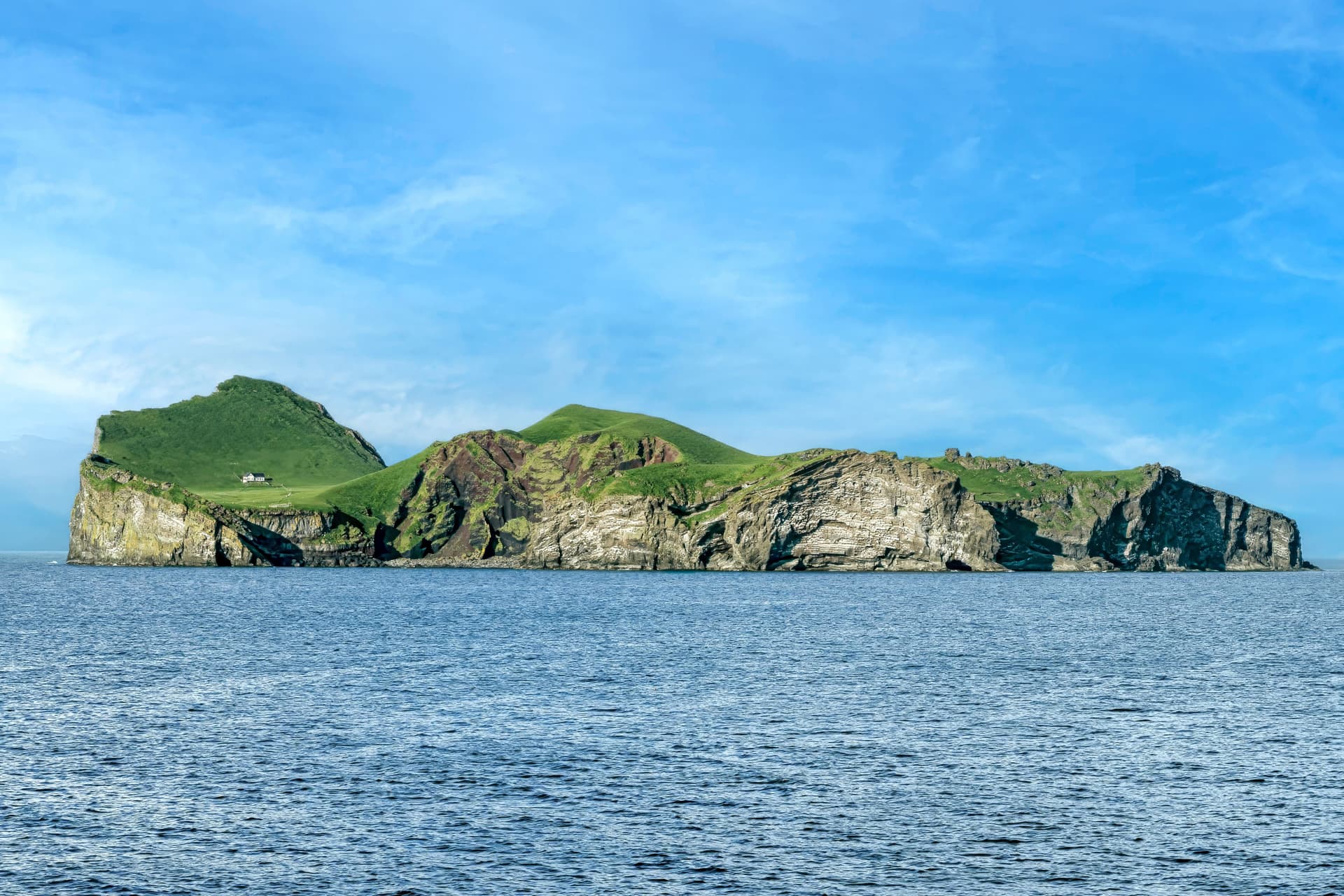
Drangey is a tabular basalt islet that rises from Skagafjörður fjord in northern Iceland. Its vertical cliffs, reaching approximately 180 meters high, shelter some of the country's densest seabird colonies. The island is also inseparable from the saga of Grettir the Strong, a hero of medieval Icelandic literature who spent his final years in exile here. Wild, difficult to access, and rarely visited, Drangey remains one of northern Iceland's most singular sites.
Practical Information at a Glance
- Access: by boat only from Reykir (Málmey peninsula) or from Sauðárkrókur — organized excursions during summer season.
- Recommended season: June to August; the island is inaccessible in winter due to maritime conditions.
- Suggested duration: half day (crossing and guided tour included in most excursions).
- Gear: hiking boots with cleated soles mandatory — the interior path is slippery and steep.
- Accessibility: not accessible; the climb from the landing point is abrupt and unimproved.
What You'll See
Drangey's cliffs host puffins, guillemots, fulmars, and shags in tens of thousands. The summit plateau, covered in short grass, offers expansive views over Skagafjörður and the surrounding mountains. A small reconstructed wooden chapel marks the site where the island's former keepers once gathered. The basalt walls display the columnar formations and strata characteristic of Icelandic volcanism.
History and Context
Drangey appears in several Icelandic sagas, but it is Grettis saga (14th century) that grants it its renown. Grettir Ásmundarson, an outlaw condemned to banishment, took refuge here with his brother Illugi for three years, living off bird hunting and eggs. He was eventually killed around 1031. For centuries, the island also served as common pasture for sheep from the farms along the fjord's shores, a practice that continued into the 20th century.
Highlights of Your Visit
The Climb via Ladder and Trail
Access to the plateau passes through a metal ladder fixed to the cliff face, then a steep marked path. The ascent demands careful attention but remains accessible to any hiker in reasonable physical condition. Views of the fjord open progressively as you climb.
The Seabird Colonies
In June and July, cliff ledges teem with puffins and guillemots. The birds are relatively unafraid and can be observed at close range. Local guides indicate nesting zones to avoid disturbing the broods.
The Chapel and Grettir's Refuge
On the plateau, a sign marks the presumed location of Grettir's shelter. The modest, unadorned wooden chapel recalls the island's pastoral heritage. These two points are the only built structures on the site.
Photography Tips
Golden-hour light in the morning and evening (in summer, the sun remains low even at midnight) beautifully sculpts the basalt columns. From the plateau, frame the fjord with snow-capped mountains in the background for maximum depth. For birds, a telephoto lens is useful; avoid flash near nesting areas. The boat crossing offers angles on the cliffs impossible to capture from the summit.
Location and Access
Drangey sits at the center of Skagafjörður fjord, approximately 15 kilometers northwest of Sauðárkrókur, the region's main town. Boat excursions generally depart from Reykir on the fjord's eastern shore. Sauðárkrókur is accessible from Akureyri via Route 75, roughly an hour's drive. No public transport serves the landing point; a rental car is necessary to reach the embarkation site.
Nearby Attractions
- Sauðárkrókur — the largest town in northwest Iceland, the logical starting point for exploring the fjord.
- Glaumbær — turf-roofed farm museum, one of Iceland's best-preserved examples of traditional architecture.
- Hofstaðir — Viking archaeological site on the Skagafjörður shores.
- Akureyri — capital of northern Iceland, roughly an hour's drive away, with museums, restaurants, and connections to the fjords.
Frequently asked questions
The season runs from June to August. This is also the birds' nesting period, which makes the visit particularly rewarding. Outside summer, maritime conditions make the crossing impractical.
Yes. Places are limited and departures depend on weather conditions. It is advisable to reserve with local operators in Sauðárkrókur several days ahead during peak season.
The climb via ladder and steep path requires agility. Children comfortable with hiking and supervised by adults can complete the visit, but it is not recommended for very young children.
Yes, photography is permitted. Guides indicate nesting zones to respect. Avoid approaching nests too closely and do not use flash.
Basic good physical condition is sufficient. The climb is short but steep. Hiking boots with cleated soles are essential; street shoes are not recommended.
Yes. The Glaumbær museum and the town of Sauðárkrókur can easily be visited the same day, before or after the boat excursion. Plan a full day to combine all three.
Interested in this visit?
We can include it in your personalised itinerary.