Jökulsárlón
Jökulsárlón
Jökulsárlón is a glacial lake in southeast Iceland where luminous blue icebergs drift toward the Atlantic. Seals, the Diamond Beach, and boat cruises among the ice make it one of the country's most spectacular natural sites.
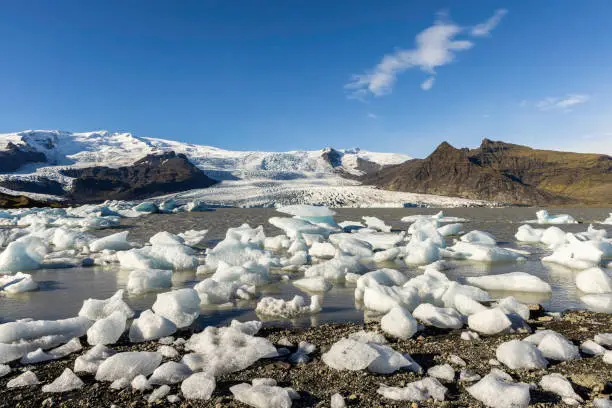
Jökulsárlón is a glacial lake in southeast Iceland, nestled at the foot of the Breiðamerkurjökull glacier, a tongue of Vatnajökull. Icebergs calve from the glacier's front, drift slowly toward the Atlantic Ocean, and wash ashore on the neighboring black sand beach. This natural spectacle, featured in several Hollywood productions, is among Iceland's most photographed landscapes.
Quick facts
- Access: on Route 1 (Ring Road), between Höfn and Skaftafell — free parking on-site.
- Lake entry: free (viewing from the shoreline).
- Recommended duration: 1 to 2 hours for the lake and Diamond Beach.
- Amphibious boat or zodiac cruises: paid, operated by companies on-site (advance booking recommended during peak season).
- Accessibility: shorelines are accessible; amphibious boats generally accommodate visitors with limited mobility (verify with operator).
- Clothing: strong winds are common — warm, waterproof garments essential year-round.
What to see
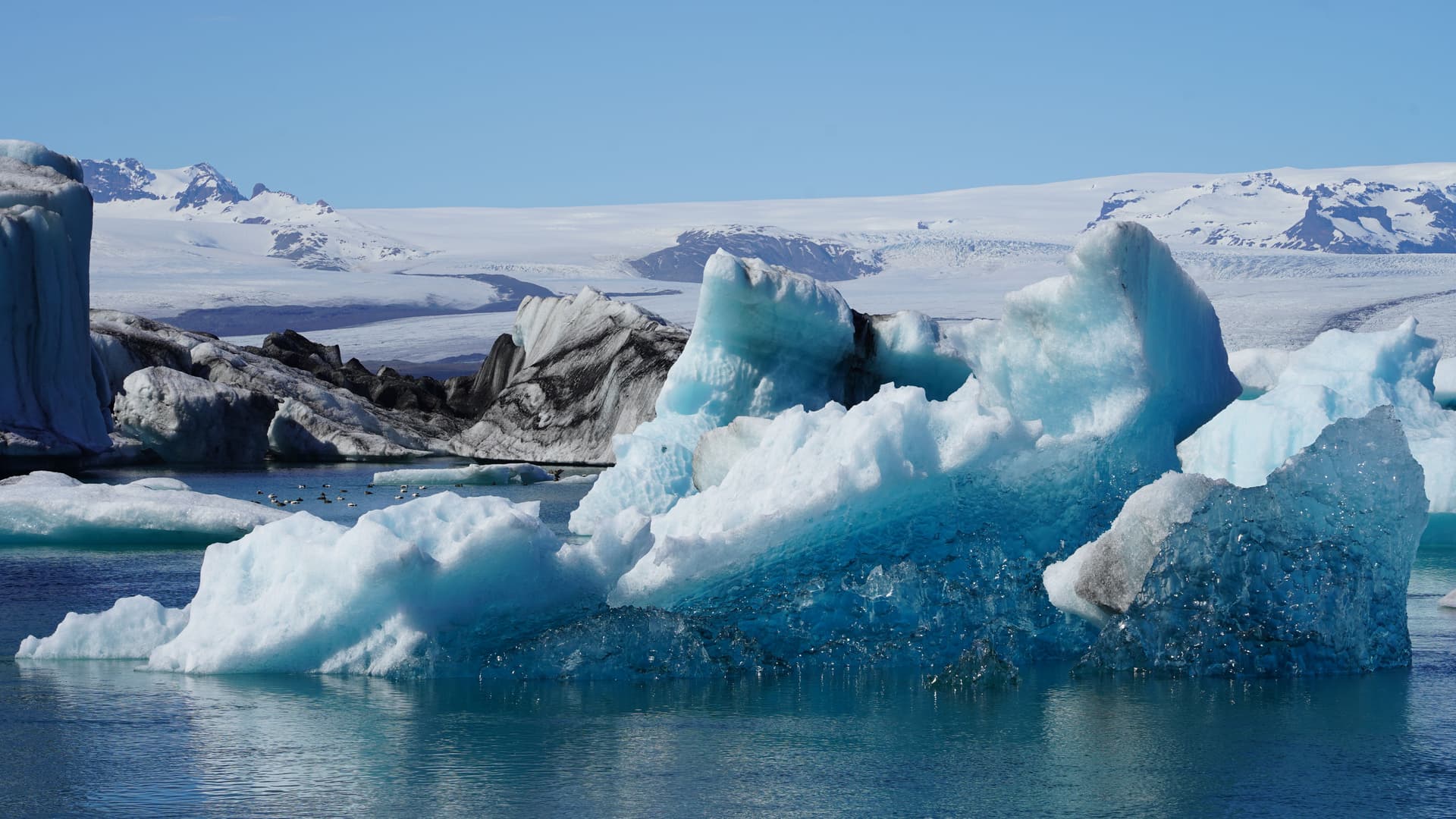
The lake spans several square kilometers, and its surface area grows each decade as the glacier retreats. Icebergs display hues ranging from milky white to deep blue depending on their density. Harbor seals regularly rest on floating ice blocks. A few hundred meters away, the Diamond Beach catches fragments of ice ejected by the ocean onto the dark volcanic sand.
History and context
The lake did not exist before the 20th century; it formed in the 1930s when Breiðamerkurjökull began to retreat. Its surface area, less than 1 km² originally, now exceeds 20 km². Depths reach over 200 meters in places, making it one of Iceland's deepest lakes. The site served as a backdrop for films including A View to a Kill (James Bond, 1985) and Die Another Day (2002), as well as Batman Begins (2005).
Highlights of a visit
The drift of the icebergs
Watching from the shore as icebergs move slowly toward the lake's outlet is mesmerizing. The largest blocks can measure several meters in height. Low-angle light at sunrise or sunset intensifies the blue hues.
Diamond Beach
At the lake's mouth, icebergs washed ashore on black sand create a striking contrast. The beach is accessible on foot from the main parking area in minutes. Be cautious of waves; they can strike suddenly and powerfully.
The seals
Harbor seals inhabit the lake year-round. They hunt in the water and rest on icebergs. Maintain respectful distance and avoid sudden noise.
Cruising among the icebergs
Amphibious boats depart from the lake's south shore and navigate among the icebergs. Zodiacs allow closer approach to the glacier front. Both options offer a perspective entirely different from viewing the lake from the shore.
Photography tips
Golden light around sunrise and sunset is ideal — in summer, these time windows extend for hours. In winter, the northern lights dancing above the icebergs are possible on clear nights. On Diamond Beach, shoot from sand level to isolate an ice block against the horizon. Protect your equipment from sea spray and wind-blown sand.
Location and access
Jökulsárlón sits on Route 1, approximately 370 km from Reykjavik and about 80 km west of Höfn. No regular public transport serves the site directly; a rental car is the standard means of access. The Skaftafell national park sector lies roughly 50 km to the west. The site is open year-round, though winter conditions can make the road challenging.
Nearby attractions
- Skaftafell — sector of Vatnajökull National Park with glacier hikes and waterfalls.
- Fjallsárlón — smaller, less crowded glacial lake a few kilometers to the west.
- Höfn — small fishing town renowned for its langoustines, approximately 80 km to the east.
- Vatnajökull — Europe's largest glacier, of which Breiðamerkurjökull is a tongue directly visible from the lake.
Frequently asked questions
The site is accessible year-round. In summer (June–August), daylight is extended and cruises operate at full capacity. In winter, the northern lights may illuminate the icebergs, but road conditions are more demanding.
During peak season (July–August), advance reservation is strongly recommended as departures often sell out. Outside peak season, walk-up registration is usually possible.
No. Walking on icebergs is forbidden and dangerous: they can flip without warning. Stay on designated shorelines or board an authorized operator's vessel.
It is on the opposite side of Route 1, at the lake's outlet. A pedestrian crossing allows you to traverse the road from the main parking area in minutes.
Yes, if you start early from Höfn or nearby lodging. Allow 1 to 2 hours at Jökulsárlón and 2 to 3 hours at Skaftafell for a short hike to the Svartifoss waterfall.
Yes, harbor seals reside in the lake permanently. They are generally more active and visible outside peak tourist hours, early morning or evening.
Interested in this visit?
We can include it in your personalised itinerary.