Getting Around Iceland
Visiting Iceland by bus, renting a car, taking a plane or ferry, or cycling… Each option comes with its own advantages, disadvantages, and costs. To organize your
Visiting Iceland by bus, renting a car, taking a plane or ferry, or cycling… Each option comes with its own advantages, disadvantages, and costs. To plan your Iceland trip effectively, the site publictransport.is offers an up-to-date catalogue of routes, service providers, schedules, and prices. You'll find an intuitive interactive map of available transportation modes according to your destination. Ready, set, go!
Getting Around by Bus
This is the most economical solution for exploring Iceland solo or as a couple. The Strætó public transport network covers a wide territory. Buses serve urban areas like Reykjavík and Akureyri, pass through Höfn in the South, Siglufjörður in the North, villages near the fjords in the Northwest, and Egilsstadir in the East. Svaust, another public operator, runs services in East Iceland departing from Egilsstadir and stopping at Borgarfjörður and Reyðarfjörður, among other places. There is a direct line between Djúpivogur and Höfn.
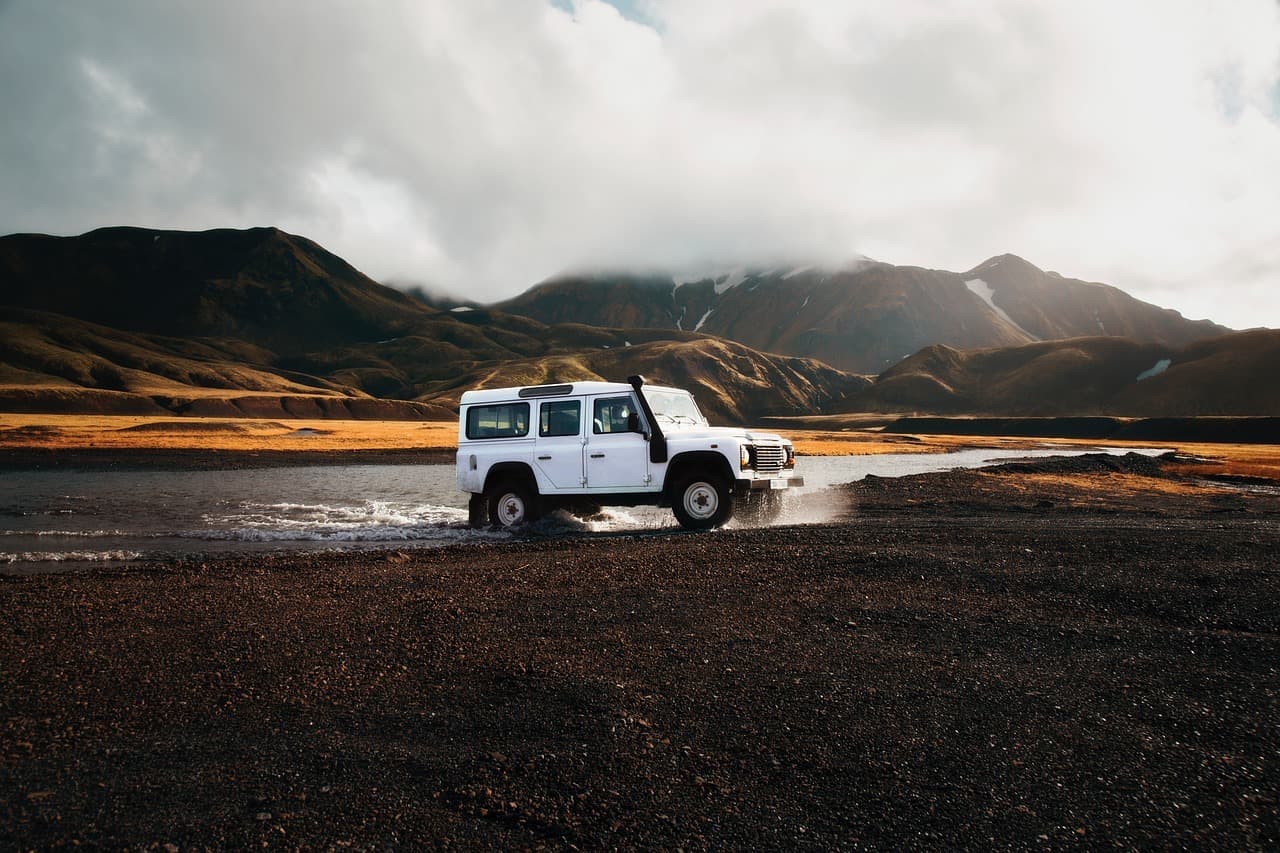
Private buses in Iceland operate only during the summer season, from June to September at most. Traveling through the interior, they allow you to reach sites that are difficult to access by regular cars (other than SUVs and 4x4s), such as the Landmannalaugar region or the Þórsmörk valley. These are all-terrain buses, capable of crossing the numerous river fords in the Highlands.
Tickets are available online, at ticket windows in parking areas, and directly onboard vehicles. Packages are available to save money: the Highland Hikers and Hikers Bus Pass for hikers, the South Coast pass for exploring Southern attractions, the Ultimate Bus Passport, the Golden Circle & Secret Lagoon tour, and more. These special passes cost between 14,000 and 28,000 ISK.
Roads in Iceland
In Iceland, roads are in fairly good condition and traffic is relatively light. Route 1, the most famous, allows you to drive around the entire country on a well-maintained asphalt road. Various points of interest are then accessible via secondary roads that are often mountain roads or trails difficult to access in a standard vehicle. Some of these roads are actually closed during winter.
Roads marked with "f" for Fjall are mountain roads. They are generally reserved for 4x4-type vehicles.
Driving in Iceland
In Iceland, the speed limit is 50 km/h in urban areas, 90 km/h on paved roads, and 80 km/h on gravel roads, though speeds rarely exceed 50 km/h due to road conditions. Speed cameras are present on roads around major towns.
Driving under the influence of alcohol is obviously forbidden, and wearing a seatbelt is mandatory.
Weather conditions often require reducing your speed, as visibility can be severely limited by fog, rain, or snow. Some roads are gravel, requiring slower speeds to avoid damaging your vehicle.
On roads in remote nature, it is not uncommon to encounter wild animals crossing, so you must remain very vigilant.