Veiðivötn
Veiðivötn encompasses around fifty volcanic lakes with varying hues across Iceland's Highlands. Renowned for sport fishing and its black lava terrain, the site is accessible by 4×4 in summer only.
Veiðivötn is a cluster of volcanic lakes situated in Iceland's Highlands, southwest of Vatnajökull. Formed by a series of eruptive fissures, these water bodies display varying shades—from deep blue to opaque green—stretching across a landscape of black lava and tundra. The site is renowned for trout and Arctic char fishing, and remains relatively undiscovered outside circles of wilderness enthusiasts.
Essentials at a Glance
- Access: Track F228, reserved for 4×4 vehicles; the road is closed outside summer (typically July–August).
- Recommended duration: a full day, or several days if planning to fish.
- Fishing: permit required, must be purchased before arrival; quotas are strict to preserve stocks.
- Accommodation: a few fishing cabins on-site; advance reservation essential.
- Accessibility: not suitable for visitors with mobility restrictions—irregular volcanic terrain, unpaved tracks.
What You'll See
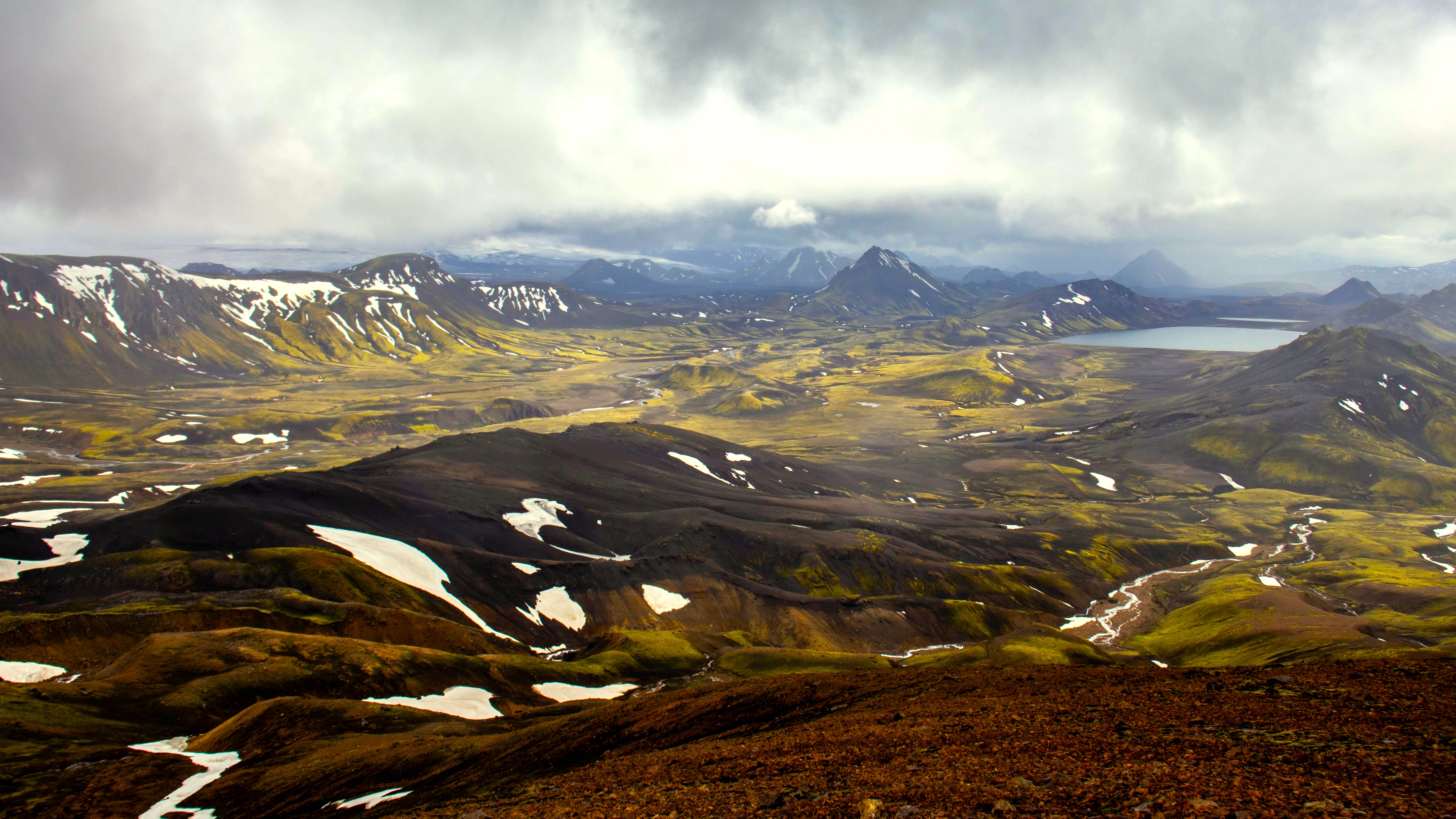
The area contains some fifty lakes of varying sizes, each with its own color determined by the mineral composition of its bed. Vegetation is sparse: black lava dominates, punctuated by mosses and lichens. On clear days, Tungnafellsjökull and other glaciers line the horizon. Birdlife is present—red-throated divers, Eurasian mergansers—and Arctic foxes frequent the zone.
History and Context
Veiðivötn literally means "fishing lakes" in Icelandic. The region is a product of volcanic activity from the Veiðivötn-Torfajökull fissure system, one of Iceland's most active. The last major eruption in this system occurred in 1477. The lakes formed in depressions created by post-eruptive collapses and the accumulation of glacial meltwater.
Highlights of Your Visit
A Mosaic of Colored Lakes
Each lake displays a distinct hue according to its depth and chemistry. Walking from one to another reveals striking contrasts against a backdrop of lava desert.
Trout Fishing
Veiðivötn is among Iceland's most prized sport-fishing destinations. The lakes support populations of brown trout and Arctic char. The season is brief and permits are in high demand.
The Silence of the Highlands
Beyond fishing groups, the site is remarkably quiet. The absence of artificial light makes it a privileged spot for stargazing in late summer.
Photography Tips
Golden light at dawn and dusk (the midnight sun in July) accentuates contrasts between black lava and colored water surfaces. A polarizing filter reduces reflections and deepens the lake hues. Avoid midday hours when light is flat. Vantage points along lava ridges offer panoramic views across multiple lakes simultaneously.
Location and Access
Veiðivötn lies in Iceland's Highlands, accessible from route F208 (Fjallabaksleid nyrðri) or F228. The most common starting point is Landmannalaugar, roughly an hour's drive northwest via track. A 4×4 vehicle with high clearance is essential. No public transport serves the area. Tracks typically open in July and close with the first autumn snows.
Nearby
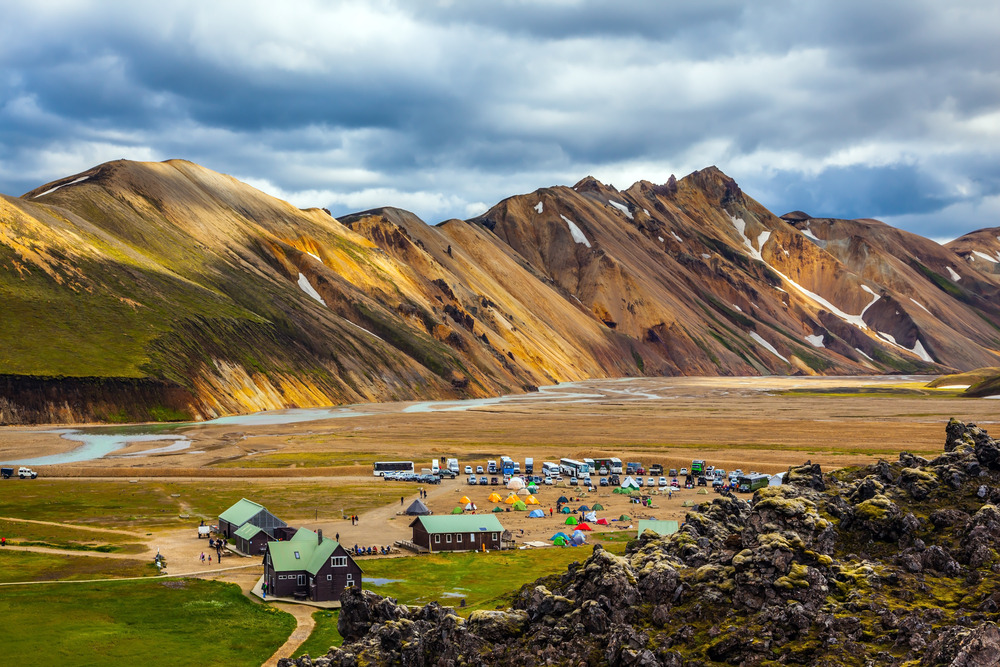
- Landmannalaugar — geothermal hot springs and multicolored rhyolite, starting point for the Laugavegur trek.
- Hekla — Iceland's emblematic volcano, visible from Veiðivötn's heights on clear days.
- Eldgjá — volcanic canyon formed during one of history's largest fissure eruptions, accessible via F208.
Frequently asked questions
Track F228 is passable in July and August. Outside this window, access is impossible without specialized equipment. July offers the best weather and the midnight sun.
Yes, a fishing permit is mandatory for each lake. Permits are limited and must be reserved in advance with local authorities. Fishing without a permit is prohibited.
A 4×4 with high ground clearance is essential. Highland tracks include fords and unstable lava sections. Standard vehicles are not permitted on F-category roads.
Yes, both sites are connected by 4×4 tracks and are often visited during the same Highland trip. Allow at least two days to enjoy both without rushing.
A few fishing cabins are available for rent, though they book quickly. Wild camping is practiced in the area; check local regulations before departing.
Interested in this visit?
We can include it in your personalised itinerary.