The Myrdalsjökull Ice Cap
The Myrdalsjökull Ice Cap
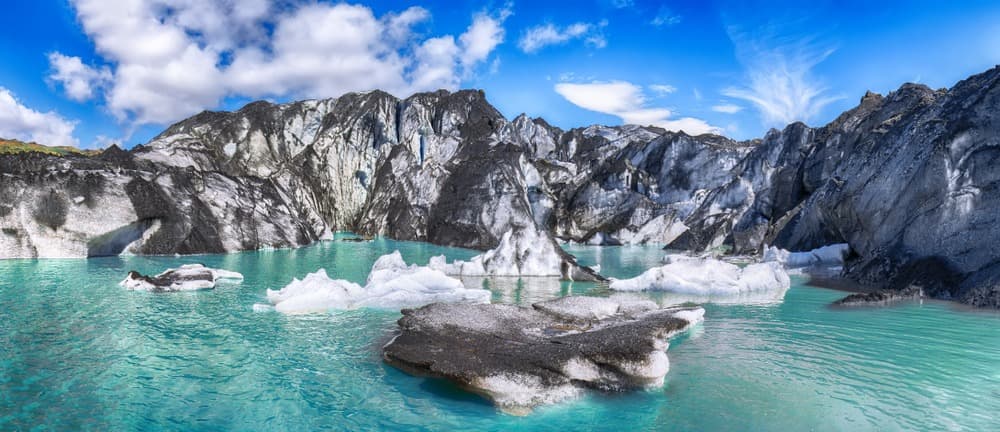
Iceland's fourth-largest ice cap, Mýrdalsjökull blankets the Katla volcano and concentrates ice caves, glacier hiking and trekking north of Vík.
Iceland's fourth-largest ice cap, Mýrdalsjökull covers one of the country's most closely monitored volcanoes: Katla. Located on the south coast, about thirty kilometres north of the village of Vík and roughly 155 km from Reykjavík, this glacier offers relatively easy access from Route 1 and concentrates several flagship activities: glacier hiking, ice caves, trekking and northern lights viewing.
Why visit Mýrdalsjökull
Mýrdalsjökull peaks at around 1,500 m and extends over 585 km², making it one of the country's most vast ice caps. Its appeal lies in the rare combination of an active ice mass and an underlying volcano, Katla, whose eruptions have shaped the surrounding ash and black sand landscapes. For the traveller, it's an accessible terrain where you can walk on ice year-round, explore a blue cave in winter, or follow up with nearby waterfalls and black sand beaches.
History and volcanic activity
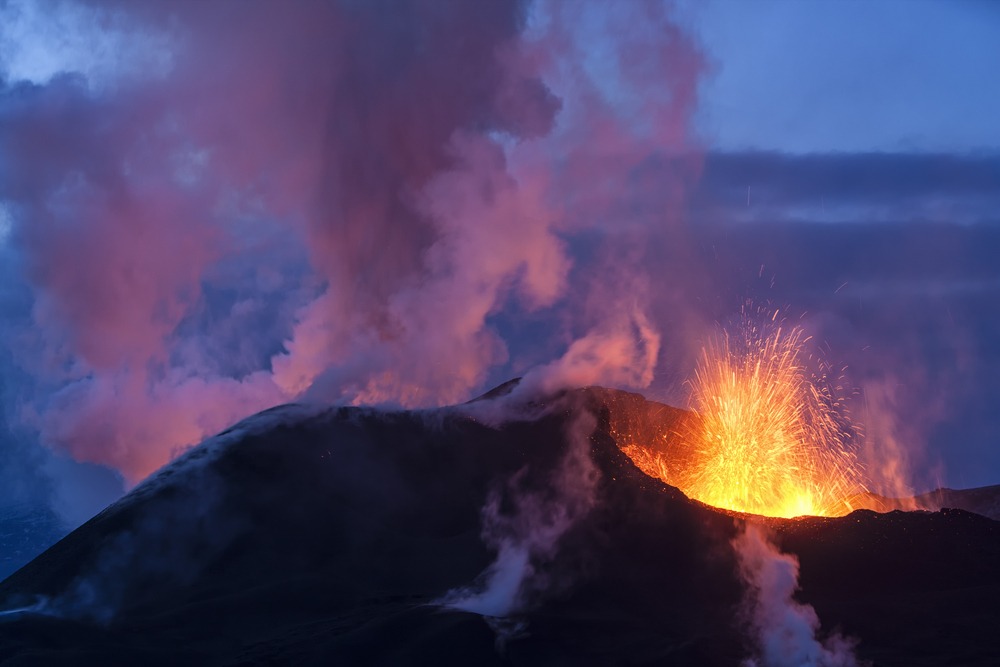
Beneath the Mýrdalsjökull ice cap lies the Katla, neighbour to the famous Eyjafjallajökull whose 2010 eruption disrupted European air traffic for over a week. According to geological records, Katla has erupted on average once every fifty years since 930 AD. Its last significant eruption dates back to 1918; it caused major lahars (glacial mudflows) to flood the south coast.
The presence of the ice cap above the volcano amplifies the consequences of an eruption: ash plumes, sudden floods linked to rapid ice melt (jökulhlaup), and agricultural impacts on the region. This activity also explains the distinctive hue of the ice caves, where layers of ash are trapped within the ice.
What to see and do
Katla ice cave
Located at Kötlujökull, a glacial tongue emerging from Mýrdalsjökull, Katla ice cave stands out for its walls blending deep blue with dark veins of volcanic ash. Guided visits are organized between December and April, when the ice is sufficiently stable. Access is by super jeep from a meeting point near Vík. The activity is prohibited for under 12s.
Glacier hiking on Sólheimajökull
Sólheimajökull, another tongue of Mýrdalsjökull, is one of Iceland's rare glaciers accessible for guided hiking year-round. The route, led by a certified guide, allows you to observe crevasses, glacial mills and ice formations sculpted by melt. Equipment (crampons, harness, ice axe) is provided by operators.
Fimmvörðuháls trek
Connecting Skógafoss waterfall to Þórsmörk refuge, the Fimmvörðuháls trek crosses the col between Mýrdalsjökull and Eyjafjallajökull. Allow 25 km and roughly 12 hours of hiking for the day version. It's a demanding route, best reserved for experienced hikers and favourable weather conditions (June to September).
Sólheimasandur plane wreck
On the black sand beach of Sólheimasandur lies the wreckage of a Douglas aircraft (US Navy) that made an emergency landing in 1973, without casualties. The site is reached on foot from a parking area on Route 1, about one hour's walk each way.
Practical information
- Access to the glacier: a parking area equipped with a café and facilities is located at the foot of Mýrdalsjökull. Allow roughly 15 minutes of walking to reach the glacial zone.
- Guided tours required: it is strongly advised against venturing alone on the glacier due to crevasses. All outings (glacier hiking, caves) are conducted with a guide.
- Equipment: waterproof hiking boots, warm clothing and windproof jacket. Crampons and technical equipment are provided by operators.
- Rates: guided excursions (glacier hiking, ice cave) fall within a high price range for Iceland; advance booking is recommended during peak season.
- Duration: allow 2 to 4 hours for glacier hiking, and a half-day for an ice cave visit from Vík.
When to visit
Summer high season (June to August) offers very long days, coastal temperatures often above 10 °C and access to all treks, including Fimmvörðuháls. On the glacier itself, the air remains cool regardless of season.
Winter (December to April) is the only period when natural ice caves are safely visitable. It's also the window for observing northern lights, visible in the region between September and April on clear nights. With changeable weather, pack warm and waterproof clothing year-round.
How to get there
From Reykjavík, follow Route 1 (Ring Road) east for around 155 km, a 2 to 2.5-hour drive depending on conditions. The glacier is visible to your left after passing Skógafoss and before arriving at Vík. Most operators offer a meeting point in Vík or directly at the parking area at the foot of the glacier.
What to see nearby
- Skógafoss waterfall and Seljalandsfoss, on the same stretch of Route 1.
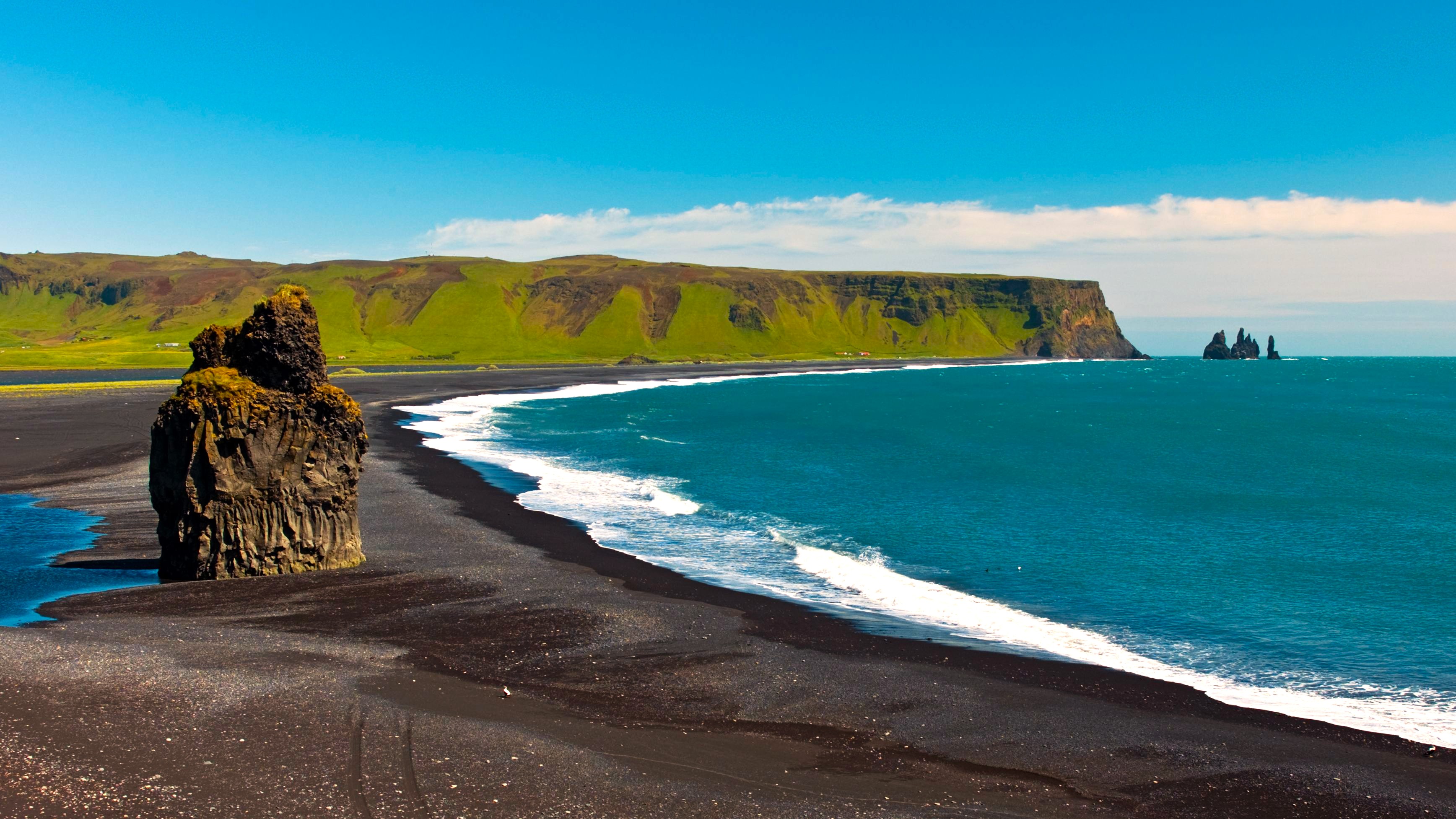
- Reynisfjara black sand beach and basalt columns, near Vík.
- The neighbouring Eyjafjallajökull glacier.
- Further inland, Mount Hekla, another iconic volcano.
Frequently asked questions
Frequently asked questions
No. The parking area and marked trails are freely accessible, but any progression onto the ice must be done with a professional equipped guide, due to crevasses and changing conditions.
Katla ice cave visits are prohibited for under 12s. For glacier hikes on Sólheimajökull, the minimum age varies by operator (often 8 to 10 years). Check when booking.
Natural ice caves are visited in winter, generally from December to April. Outside this period, melting renders structures unstable and inaccessible.
Allow a half-day for glacier hiking or an ice cave visit from Vík. To combine with waterfalls and Reynisfjara, plan a full day from Reykjavík, or even an overnight stay.
The volcano is under permanent surveillance by the Icelandic Meteorological Office. Should precursory signs of eruption appear, authorities immediately close affected areas and evacuate visitors. Local operators follow these guidelines in real-time.
Planning your trip
Mýrdalsjökull fits naturally into an itinerary along Iceland's south coast, between waterfalls, black sand beaches and fishing villages. To build a journey that combines the glacier with other must-sees of the country, explore our Iceland trips.
Nearby
Interested in this visit?
We can include it in your personalised itinerary.