SELJALANDSFOSS
SELJALANDSFOSS
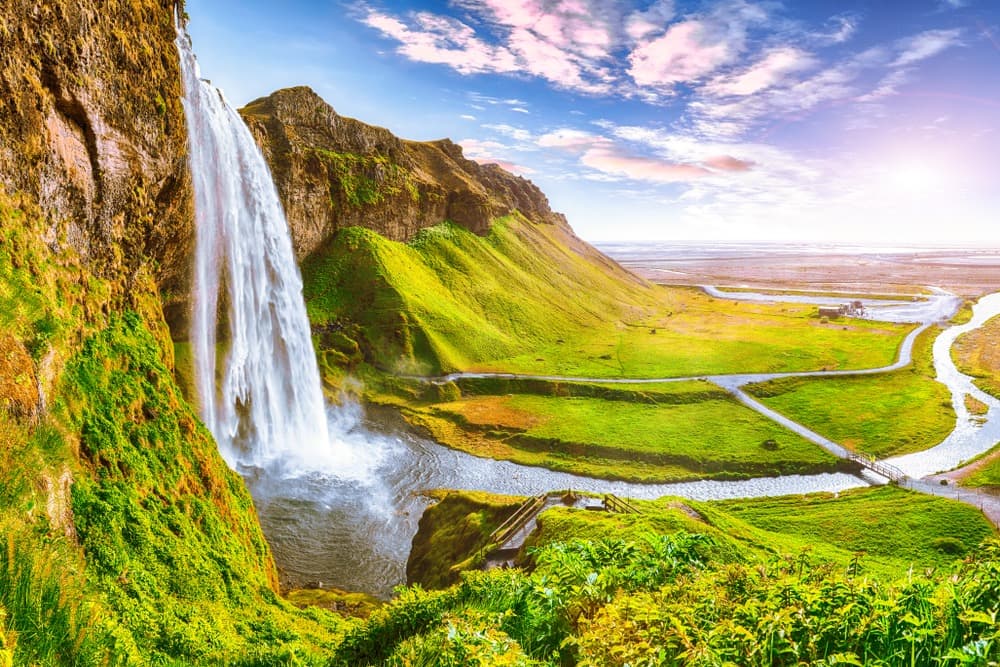
A 65 m waterfall on Iceland's south coast, 120 km from Reykjavik. Its distinctive feature: a trail allows you to walk behind the water curtain.
Located on Iceland's south coast, 120 km from Reykjavik via Route 1, the Seljalandsfoss waterfall plunges from a cliff 65 metres high. Its defining feature: a trail allows you to walk behind its water curtain, offering a rare vantage point among Icelandic waterfalls.
Why visit Seljalandsfoss
Seljalandsfoss ranks among Iceland's most distinctive waterfalls, primarily because of the maintained passage that loops behind the cascade. This geological configuration, where erosion has carved a cavity behind the curtain, remains uncommon at this scale. The waterfall is fed by the Seljalands River, whose water originates from glacier melt in the mountains surrounding the Eyjafjallajökull volcano.
The site has also appeared in several audiovisual productions: Justin Bieber filmed part of his "I'll Show You" music video here, the American television show The Amazing Race used it as a waypoint in 2004, and the waterfall features in the film CKY2K, accompanied by a Björk soundtrack.
What to see and do
The passage behind the waterfall
The trail that loops around the water curtain is the site's main attraction. The passage is narrow, slippery, and you'll generally emerge soaked: plan for waterproof clothing and shoes with good grip. Protecting your camera equipment is also recommended.
Light and orientation
The waterfall faces due west, making it a prime subject at sunset, when light filters through the water curtain. In winter, two beams of light illuminate the cascade at night. When conditions align (clear skies, sufficient solar activity), you can observe the Northern Lights above the site.
Gljufrabui, the hidden neighbour
A few hundred metres north, along Route 249, the Gljufrabui waterfall (40 m) flows inside a narrow canyon. Access is via a stream crossing, and the site sees far fewer visitors than its neighbour.
When to visit
Seljalandsfoss is accessible year-round and visits are free. Each season offers a different experience:
- Summer (June to August): long days, trail behind the waterfall accessible, denser crowds mid-day. Late sunsets are particularly favourable for photography.
- Autumn and spring: moderate visitor numbers, soft light. In spring, water can be heavy with sediment carried by snowmelt.
- Winter: snow-covered scenery, nighttime illumination of the water curtain, possibility of viewing the Northern Lights. The passage behind the waterfall is often closed due to ice.
To avoid peak crowds, visit early in the morning or late in the day.
Practical information
- Fee: free entry, paid parking (modest rate).
- Visit duration: allow 1 to 1.5 hours on site, longer if combining with Gljufrabui.
- Equipment: waterproof jacket, non-slip shoes, camera protective case.
- Accommodation: a camping site is located immediately adjacent to the waterfall.
- Winter accessibility: the trail behind the cascade can close if icing occurs.
How to get there
By car
From Reykjavik, allow approximately 2 hours driving via Route 1 (Hringvegur), covering 120 km. At the junction with Route 249, turn towards the waterfall: a designated parking area is located nearby. Seljalandsfoss is visible from Route 1, making it easy to spot.
By bus and organised excursions
Several Icelandic bus operators offer regular services from Reykjavik in season, as well as day trips combining Seljalandsfoss with other south coast sites. Rates and frequencies vary by season; check ahead of your trip.
Nearby attractions
- Skogafoss (62 m high, 25 m wide), 30 km east: more massive than Seljalandsfoss, with no passage behind. Legend has it that Iceland's first settler, Þrasi Þórólfsson, hid treasure there.
- Reynisfjara Beach, approximately 45 minutes away: black sand and basalt columns.
- Seljavallalaug Hot Pool: an old natural thermal basin in an isolated valley.
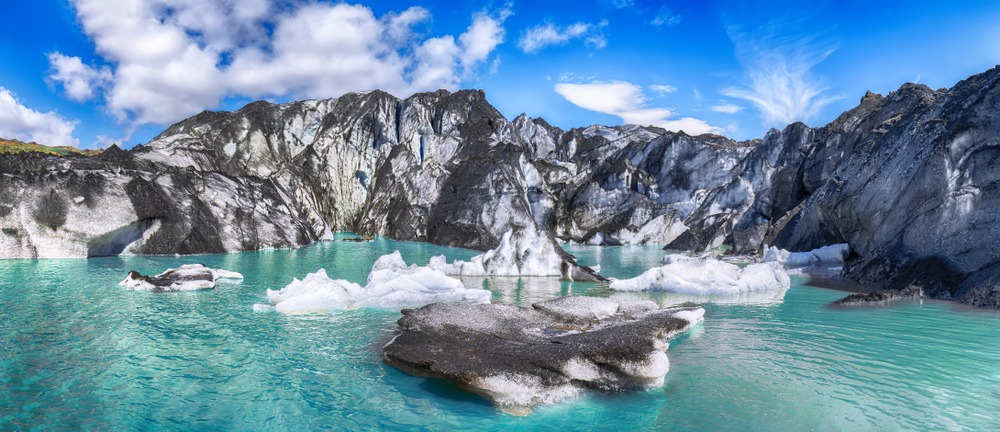
- Thórsmörk Valley: gateway to glacier and volcano country, including the Myrdalsjökull ice cap and Katla.
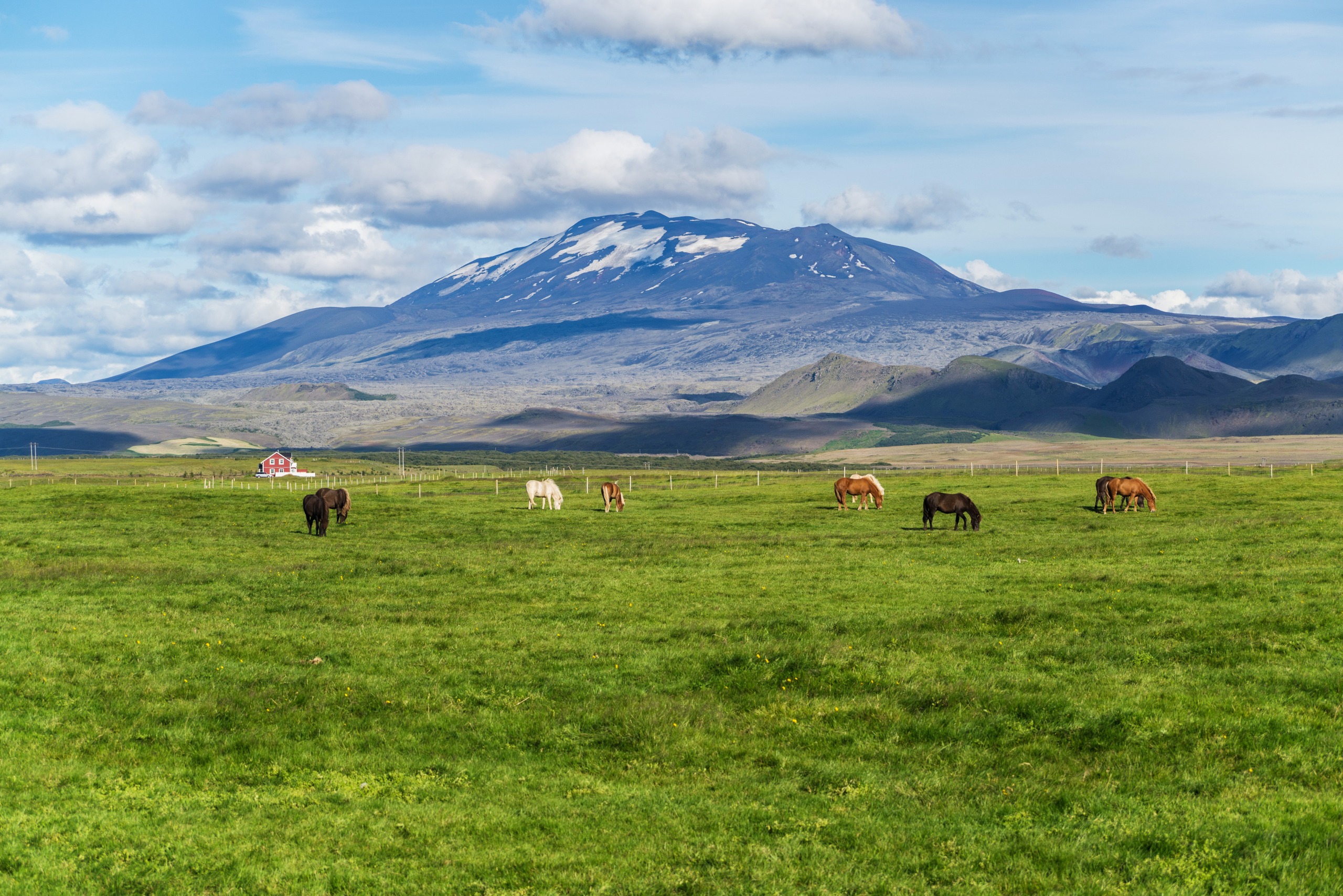
- Mount Hekla: an iconic volcano of the south, explored via the Mount Hekla guide.
- Vik: coastal village 60 km east, a useful stopping point to continue toward the southeast.
Frequently asked questions
Frequently asked questions
Yes, a maintained trail loops around the water curtain. It is generally passable from late spring to early autumn, and closes in winter when ice makes it hazardous.
Site access is free. Only parking is subject to a modest fee.
Plan for around 1 to 1.5 hours for the waterfall alone, and 2 to 3 hours if you include Gljufrabui, located a few hundred metres away.
Yes, when conditions permit (clear skies, solar activity, sufficiently dark night, typically October to March). Winter's nighttime illumination of the waterfall adds visual interest.
Seljalandsfoss (65 m) is taller and narrower, with access behind. Skogafoss (62 m) is wider (25 m) and more powerful, but with no rear access.
Planning your Icelandic journey
Seljalandsfoss fits naturally into a south coast itinerary, whether a day trip from Reykjavik or a longer route to Vik and Jökulsárlón glacier lagoon. To tailor your journey, explore our Iceland travel packages.
Interested in this visit?
We can include it in your personalised itinerary.