Top 5 Volcanoes to Discover in Iceland
Located on the Mid-Atlantic Ridge, Iceland is home to one of the highest concentrations of volcanoes on Earth relative to its small surface area.
Located on the Mid-Atlantic Ridge, Iceland is home to one of the highest concentrations of volcanoes on Earth relative to its small surface area. In total, there are approximately thirty volcanic systems and more than 130 volcanoes. Planning a trip to Iceland and unsure which volcano to visit? Discover our top 5 volcanoes to see in Iceland.
1. Eyjafjallajökull, the Popular One
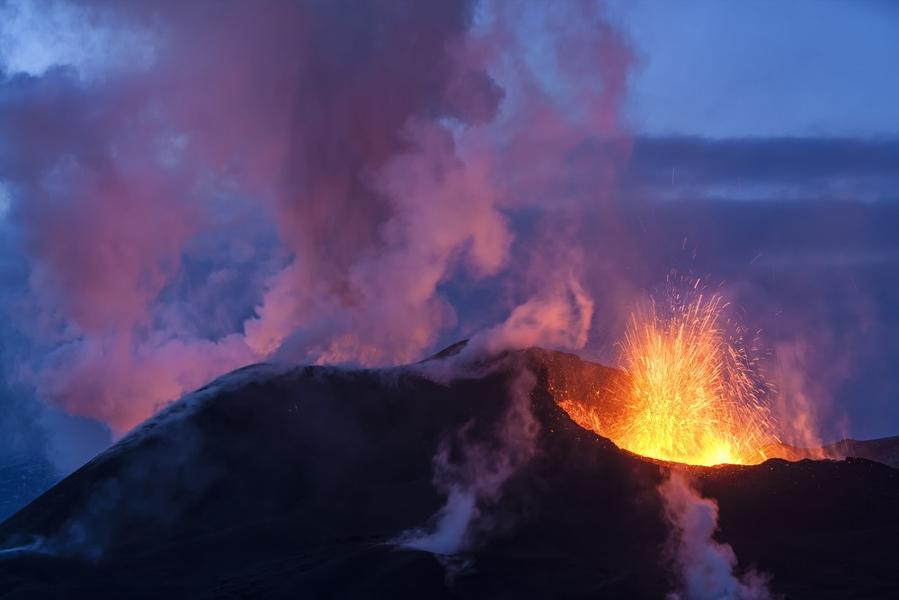
Eyjafjallajökull is one of Iceland's most well-known volcanoes. Its appearance in the films 'Eyjafjallajökull' and 'The Secret Life of Walter Mitty' has greatly contributed to its popularity.
Located in the southwest of the island, Eyjafjallajökull is Iceland's oldest active stratovolcano, estimated to be 700,000 years old. Eyjafjallajökull is far more than a simple volcano. It is also Iceland's sixth-largest glacier. In fact, Eyjafjallajökull is essentially an ice cap containing an active volcano known as Eyjafjöll.
To discover the sublime landscapes of Eyjafjallajökull, you can climb to its summit. While you're there, take advantage of the opportunity to explore the magnificent waterfalls formed by glacial melt over the centuries, such as the spectacular Skogafoss cascade, considered Iceland's most beautiful waterfall.
The eruptions of Eyjafjallajökull volcano
The most recent eruptions of Eyjafjallajökull occurred in 920, 1612, 1823, and March 2010. The 2010 eruption received worldwide media attention due to the disruptions it caused. The spectacular clouds of smoke and ash even halted aviation across Western and Northern Europe.
2. Hekla, One of the Most Active
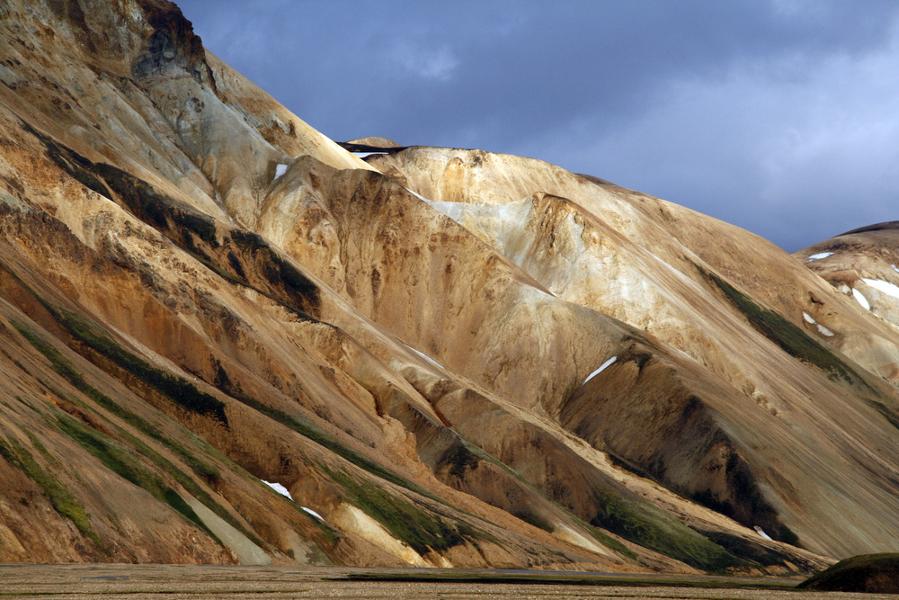
Located in the Highlands south of the island, Mount Hekla is a red volcano, geologically considered to be halfway between a fissure eruption and a stratovolcano. At approximately 600,000 years old, it is one of Iceland's and the world's most active volcanoes.
Due to its frequent eruptions, Hekla is renowned for having produced more lava worldwide in the last millennium than any other volcano: it has generated 8 km³ of lava, covering landscapes and significantly shaping Iceland.
For a long time, it was nicknamed the "Gates of Hell". According to popular belief, it once served as purgatory for damned souls. Consequently, the first recorded human ascent of Hekla didn't occur until 1750.
To discover the lunar landscapes of Mount Hekla, you can climb to its summit, which stands at 1,488 m in altitude. Plan for approximately 7 hours of hiking for the round trip.
The eruptions of Hekla volcano
The first recorded eruption of Hekla occurred in 1104. Subsequently, there have been approximately twenty eruptions, some lasting several months. The eruption of March 29, 1947, for example, continued until April 1948. Hekla's most recent eruption took place from February 26 to March 8, 2000.
3. Krafla, the Bubbling One
Situated directly on the Mid-Atlantic rift, in northeastern Iceland and more specifically just above Lake Myvatn, Krafla stands in one of Iceland's most volcanically active zones. The magma chamber lies just 2.1 km beneath the surface. This proximity to the surface creates an area of intense volcanic, fumarolic, and geothermal activity.
This volcanic system is quite ancient: it is estimated to have been formed during the last glacial period, approximately 100,000 years ago. It features a significant fracture zone belonging to the Mid-Atlantic rift (which traverses the central volcano and extends from Öxarfjörður in the north to the heart of Ódáðahraun in the south), dotted with numerous explosion craters, sub-glacial ridges, and table mountains.
Though it stands only 818 meters high, the Krafla volcano impresses with its otherworldly landscapes. Its caldera extends approximately 10 km.
Among the sites of interest that are direct consequences of Krafla, one can cite Leirhnjúkshraun, a vast lava field (66 km²) dating from the last eruption, which ended in 1984, and the explosion crater Viti, now extinct and occupied by a lake renowned for its incredible turquoise color.
The eruptions of the volcano
Since May 17, 1724, Krafla has experienced 29 eruptions. The eruption of May 17, 1724, called the "Myvatn fire,