Iceland's Demographics
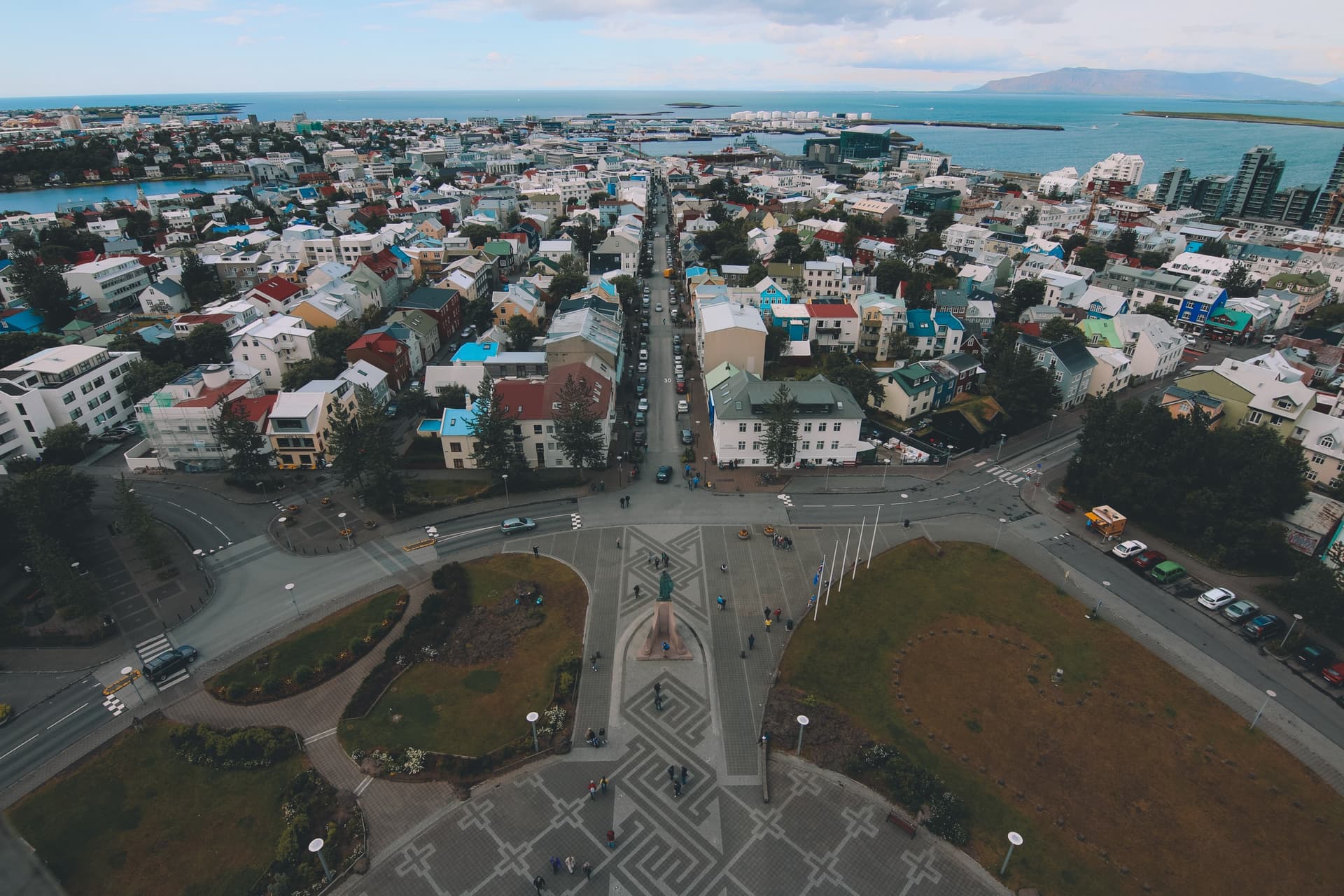
With its sparse population, Iceland stands out as an almost uninhabited land compared to other European countries. Despite vast stretches of untouched territory across the country, Icelanders primarily inhabit the south of the island, particularly within the capital Reykjavik.
With its sparse population, Iceland stands out as an almost uninhabited land compared to other European countries. Despite vast stretches of untouched territory across the island, Icelanders primarily inhabit the south, particularly within the capital Reykjavik.
Beyond distribution patterns, Iceland's demographic history, population composition, languages spoken, and other key factors are essential knowledge for fully appreciating your stay in the land of fire and ice. Here's what you need to know.
Iceland's Demographic History
Iceland experienced its first demographic expansion under the Danish colonial empire between the 9th and 10th centuries. Following this period, the local population, numbering around 40,000 individuals by 930, remained largely stagnant for several decades. Major epidemics, notably the Black Death in 1402 and the bubonic plague in 1707, wiped out more than a third of the island's inhabitants.
By 1703, a census revealed that Iceland's demographics had evolved only modestly over eight centuries, with just 50,358 residents. This figure dropped to 47,713 by 1803 following periods of famine and mini-glaciation in the 18th century, as well as the Laki volcanic eruption between 1783 and 1785.
With improving climate conditions, advancements in agriculture and fishing enabled the island's population to thrive and expand throughout the 19th century. Censuses recorded 61,875 inhabitants in 1853 and 79,181 in 1903. The demographic explosion occurred in the 20th century, when the population reached 148,978 by 1953. By 1973, this figure had grown to 210,913 inhabitants. This expansion continued into the 21st century, with 288,471 residents in 2003 and 331,918 by 2015—a growth driven partly by milder climatic conditions and industrial and economic progress within the country.
Iceland's Population Today
The 2018 census placed Iceland's population at 348,450 individuals, with a density of 3.38 inhabitants per km² and a demographic growth rate of 2.99% annually. The fertility index stands at 1.75 children per woman (2016). Nearly 40% of inhabitants are under 18 years old, making Iceland a relatively young nation. Life expectancy hovers around 82 years, with a very low infant mortality rate (0.70‰ in 2016). Over 92% of the population live in urban areas, notably in Reykjavik and its immediate surroundings. The Icelandic diaspora comprises approximately 50,000 people scattered worldwide, particularly in Canada and the United States.
While the majority of Icelanders are native to the island, the country's economic development has brought an influx of foreign-origin populations, primarily from Poland, Denmark, the United States, Sweden, Germany, and beyond. Norwegian, Lithuanian, Latvian, French, as well as Filipino, Vietnamese, and Chinese communities are also present within the country.
Iceland's Geographic Population Distribution
This stands as one of the great peculiarities of Iceland's demographics. Despite their small numbers relative to the island's size, the vast majority of Icelanders have concentrated in one quarter of the southwestern region. Vast territories remain uninhabited, particularly the Highlands, glacier regions, the northwest fjords, and parts of the northern coast. You can drive Route 1 for tens of kilometers without spotting a single house.
Since gaining independence in 1944, Icelanders have become a largely urban population. The Reykjavik metropolitan area now hosts over 200,000 residents—roughly two-thirds of the nation's total inhabitants. The remainder is scattered across a few major towns such as Selfoss, Keflavik, Akureyri, and Akranes.
Languages for Communication in Iceland
Spoken since the Middle Ages by Scandinavians, Icelandic is a Germanic language of Old Norse origin. The island's inhabitants have long placed great importance on written culture, which has fostered the preservation of the original language both on paper and in speech. Danish and English are widely used throughout the country. German and French are part of secondary school curricula.
Religion in Iceland
Like all Scandinavian territories, Iceland has embraced the Reformation for centuries. The national religion is led by the Evangelical Lutheran Church of Iceland, encompassing over 80% of the population according to 2005 statistics. 5.5% of Icelanders follow unrecognized religious organizations. The capital's and Hafnarfjörður's free churches unite 4.7% of inhabitants, while the Catholic Church welcomes just 2.4%. 2.6% of the population are unaffiliated with any religious community. The remaining 2.7% are distributed among sects or other Christian groups. The non-Christian community, predominantly Muslim, represents less than 1% of the population.